Outdoor stone flooring is one of the most highly valued options when designing terraces, patios, or gardens. Its ability to blend into the surroundings, along with its durability and timeless style, makes it a very versatile solution for both residential projects and contract spaces.
When choosing outdoor paving, it’s not only the material that matters, but also how it responds to weather conditions, its maintenance requirements, and the type of installation. In this article, we’ll look at the key characteristics outdoor stone flooring should have, the different types available, when to choose natural stone or stone-look alternatives, and how to apply them in various spaces—along with some design ideas to inspire each project.
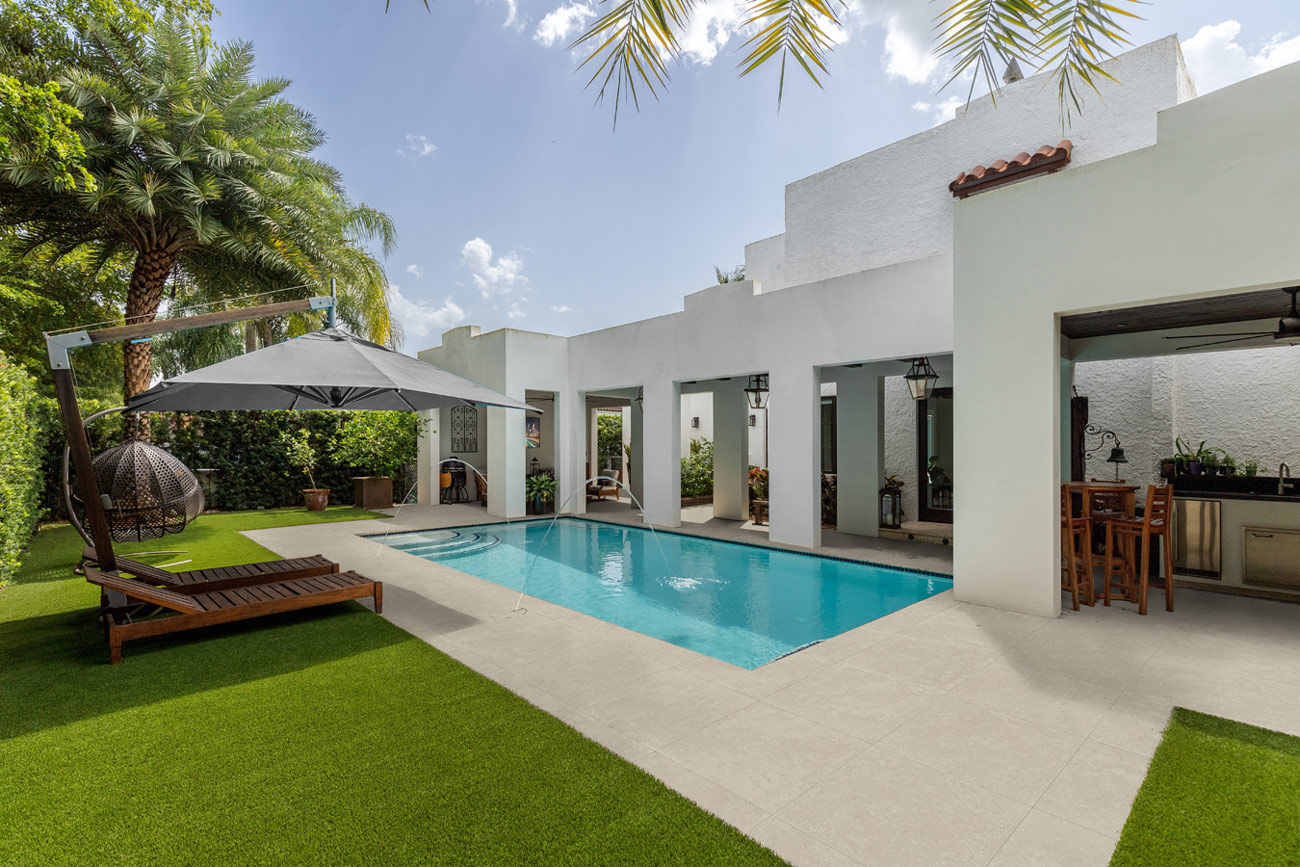
What should outdoor stone flooring have?
Choosing good outdoor stone flooring means taking into account a set of technical requirements that ensure durability and safety over time. It’s not just about design—the paving must withstand heavy use and changing environmental conditions.
Among the key characteristics, the following stand out:
Resistance to weather conditions: the flooring must withstand temperature changes, rain, humidity, and sun exposure without deteriorating.
Low water absorption: especially important outdoors, to prevent issues caused by moisture or frost.
Anti-slip properties: essential in areas such as terraces or around pools, where safety is crucial.
Durability under traffic: the surface should maintain its appearance and performance even with continuous use.
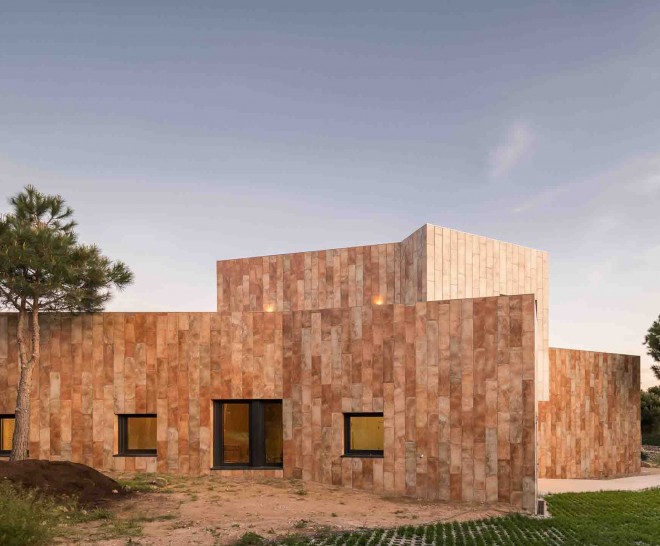
Integration with the surroundings and the project: the flooring is part of the overall architectural design and should harmonize with both the home and the landscape.
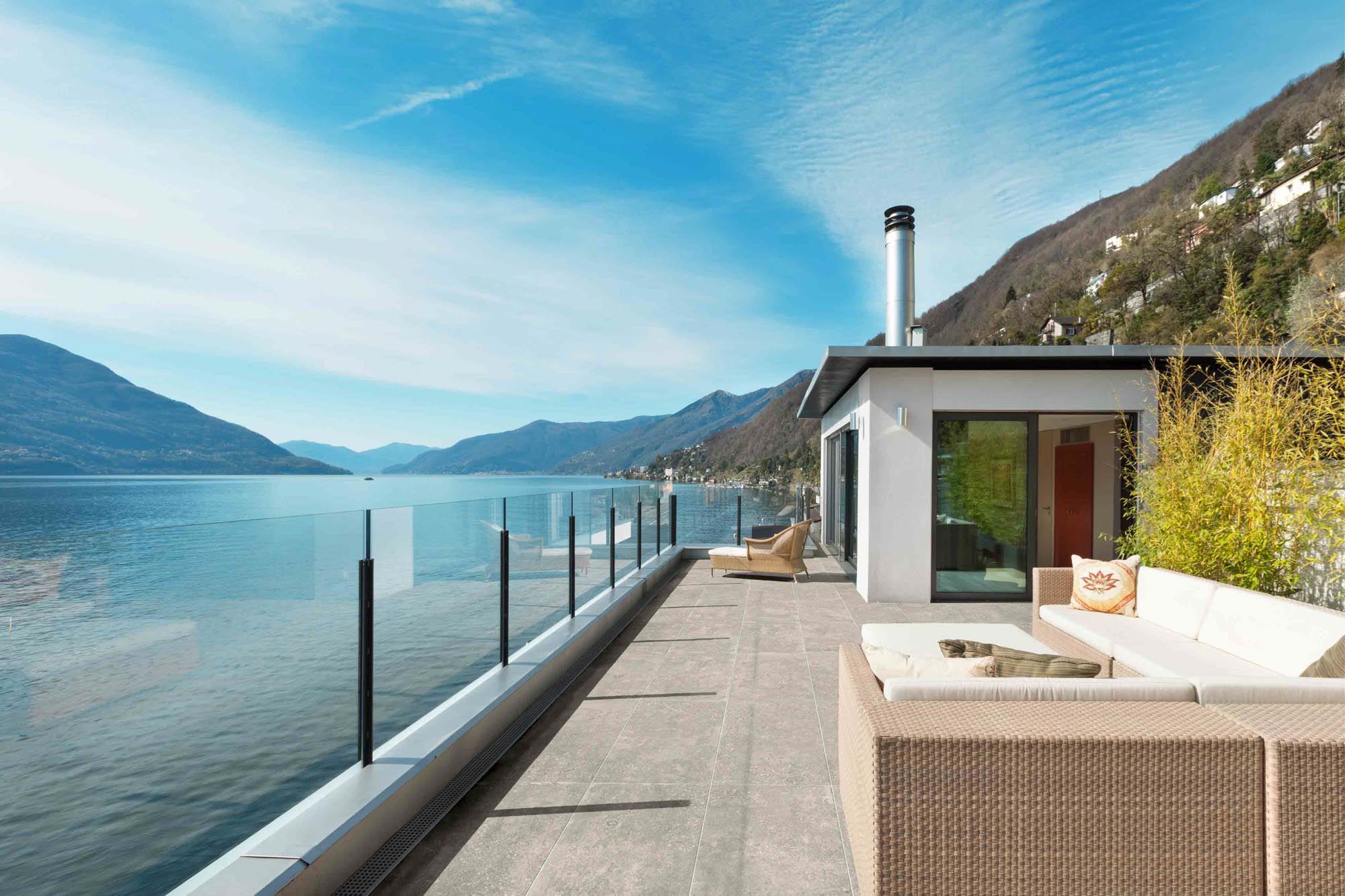
Types of outdoor stone flooring
Outdoor stone flooring can be classified according to the type of material it comes from. Each option has its own characteristics in terms of strength, texture, and performance against weather conditions, which influences both its use and the type of project it best suits.
Granite flooring for outdoor use
Granite is one of the most durable stones used in outdoor paving. Its high hardness and low porosity make it especially suitable for high-traffic areas or spaces exposed to demanding weather conditions.
Its compact appearance and wide range of tones allow it to be integrated into both contemporary projects and more traditional designs.
Sandstone flooring in outdoor spaces
Sandstone is a type of stone closely associated with natural and landscaped environments. It is characterized by its slightly porous texture and more organic appearance, making it a common choice for gardens, pathways, and transitional areas between architecture and nature.
Its ability to blend into the surroundings makes it particularly appealing in projects where visual continuity with the landscape is desired.
Travertine outdoor flooring
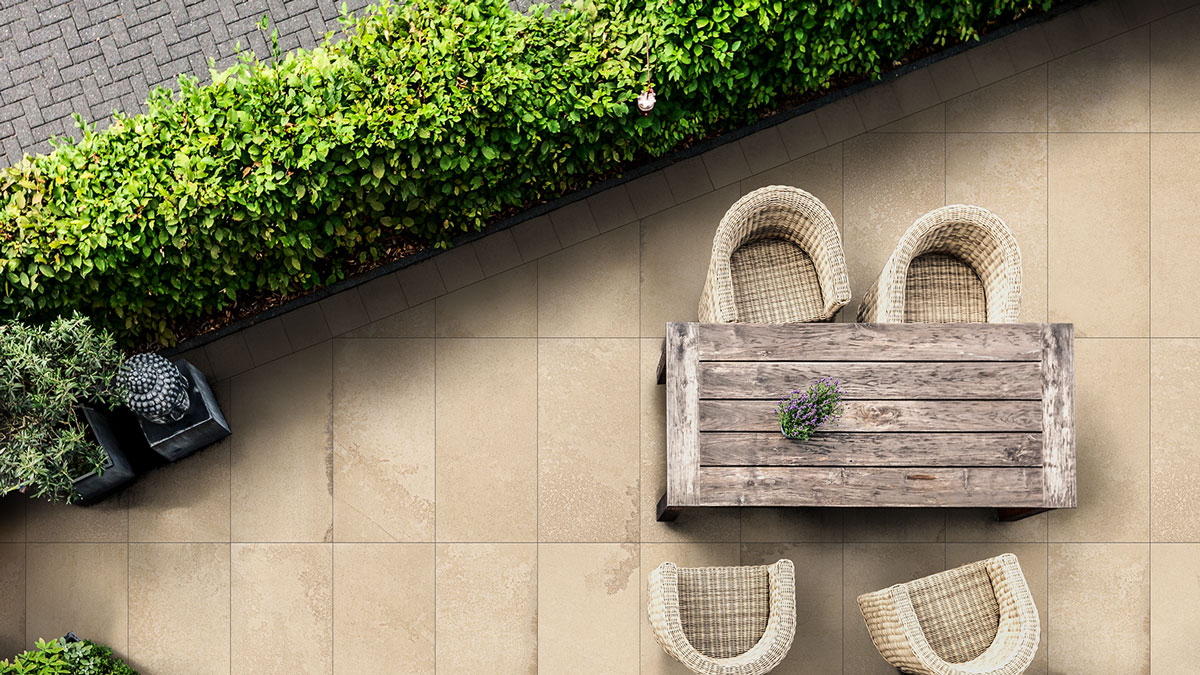
Travertine is a stone widely used outdoors due to its balance between durability and comfort. Its surface features small natural cavities that add texture and create a warm finish, making it a popular choice for terraces and pool areas.
It’s an option that works especially well in spaces where a surface is needed that combines long-lasting performance with a more pleasant feel to the touch.
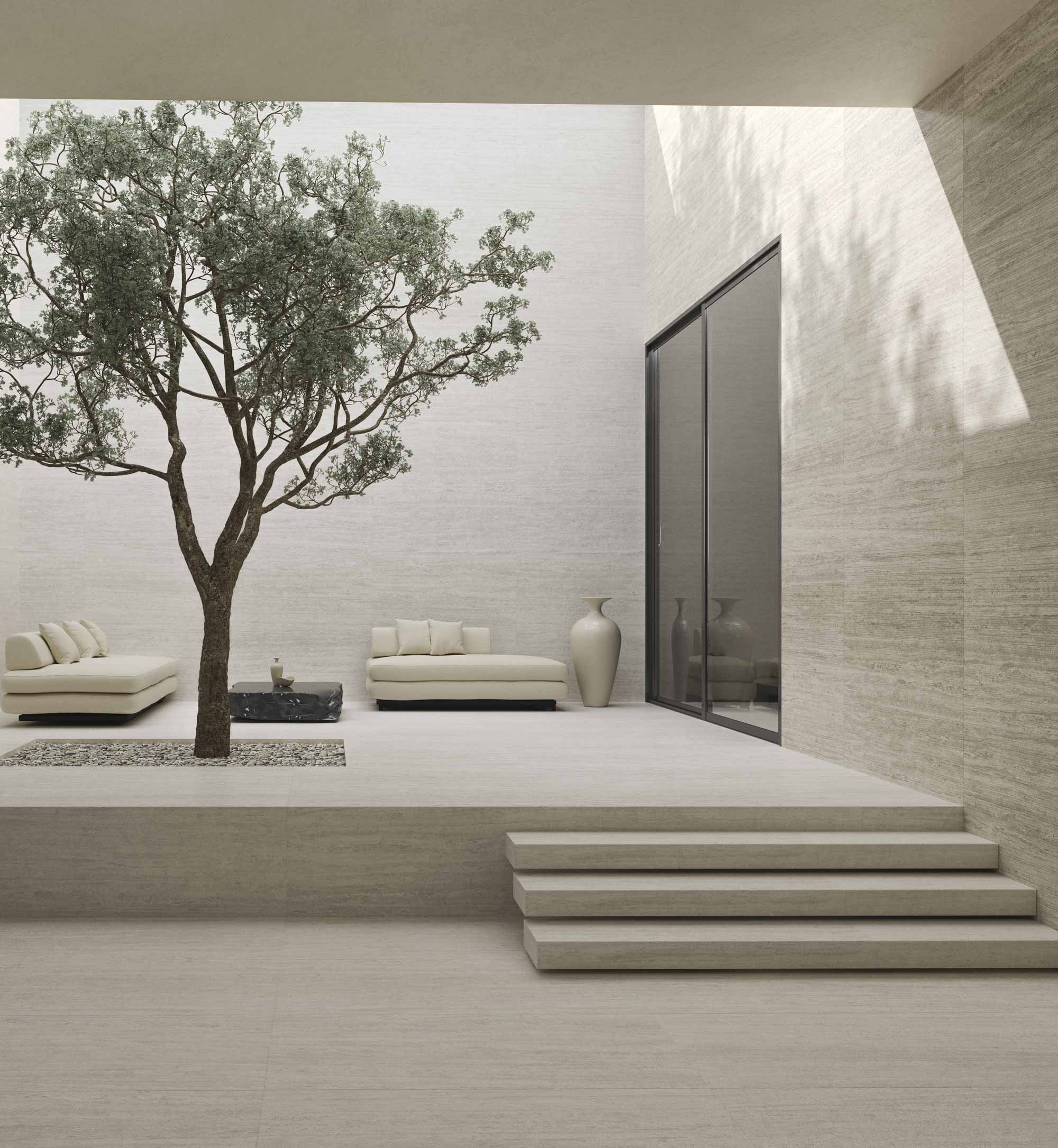
Stone-look flooring for outdoors
In addition to natural stone, there are also flooring options that replicate its appearance using ceramic materials. Stone-look flooring allows the texture and character of different types of stone to be brought into outdoor spaces, while offering a wide variety of finishes and formats.
This type of paving has evolved significantly in recent years, incorporating more realistic surfaces and solutions adapted to different outdoor installation methods.
Natural stone flooring vs. stone-look flooring for outdoors
When choosing outdoor paving, one of the most common decisions is whether to go for natural stone or stone-look flooring. Both options allow for the creation of characterful spaces, but they differ significantly in terms of performance, maintenance, and application possibilities.
Natural stone offers an authentic finish, with inherent variations in the material that give each piece a unique character. However, it also requires more care in both installation and maintenance, as its behavior against moisture or temperature changes can vary depending on the type of stone.
On the other hand, outdoor tiles made from ceramic materials can closely replicate the texture and appearance of natural stone, while offering more stable technical performance. Their low water absorption, resistance to wear, and the possibility of incorporating anti-slip surfaces make them a particularly suitable solution for outdoor areas.
In addition, this type of flooring offers greater versatility in formats and installation systems, making it easier to adapt to terraces, gardens, or pool areas. Compared to the variability of natural stone, stone-look porcelain allows for greater control over the final result, ensuring visual continuity throughout the space.
Where to use stone flooring outdoors
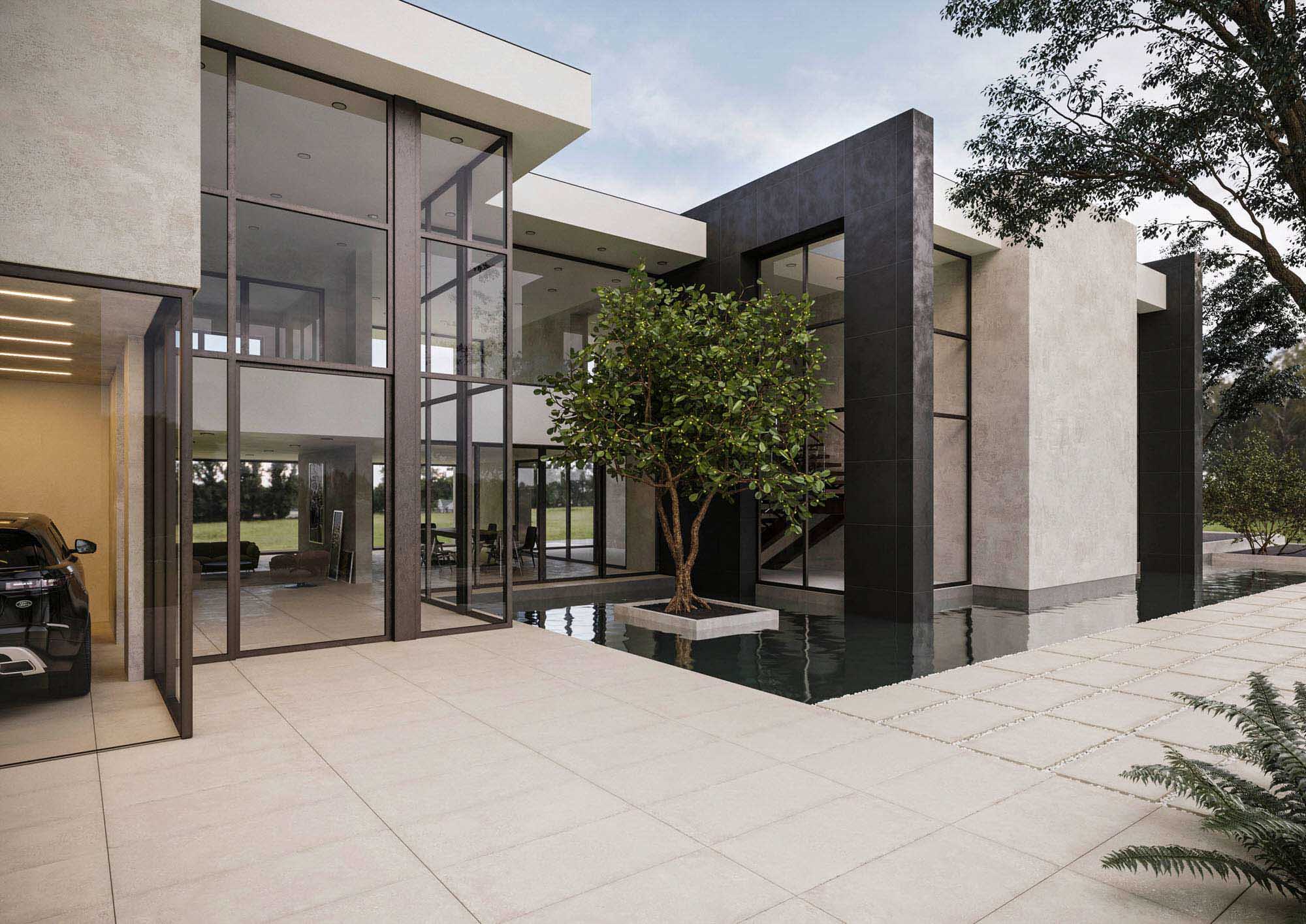
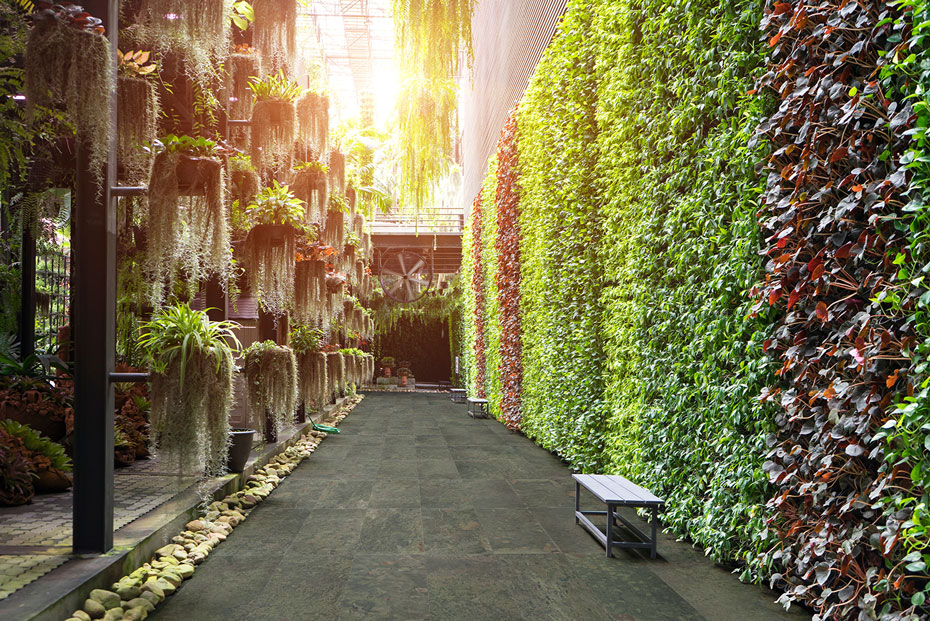
Stone-look outdoor flooring adapts to a wide variety of spaces and uses. Its versatility allows it to be installed in both continuous surfaces and more open solutions that integrate with the surrounding environment. The choice of paving type and installation system has a direct impact on the final result.
Terraces and balconies: they provide continuity with interior spaces and create durable, easy-to-maintain surfaces, especially in areas where flooring is part of the overall architectural design.
Gardens and pathways: they blend naturally into the environment and allow for the design of walkways, circulation routes, or resting areas. In these types of projects, garden paving helps strengthen the relationship between architecture and landscape.
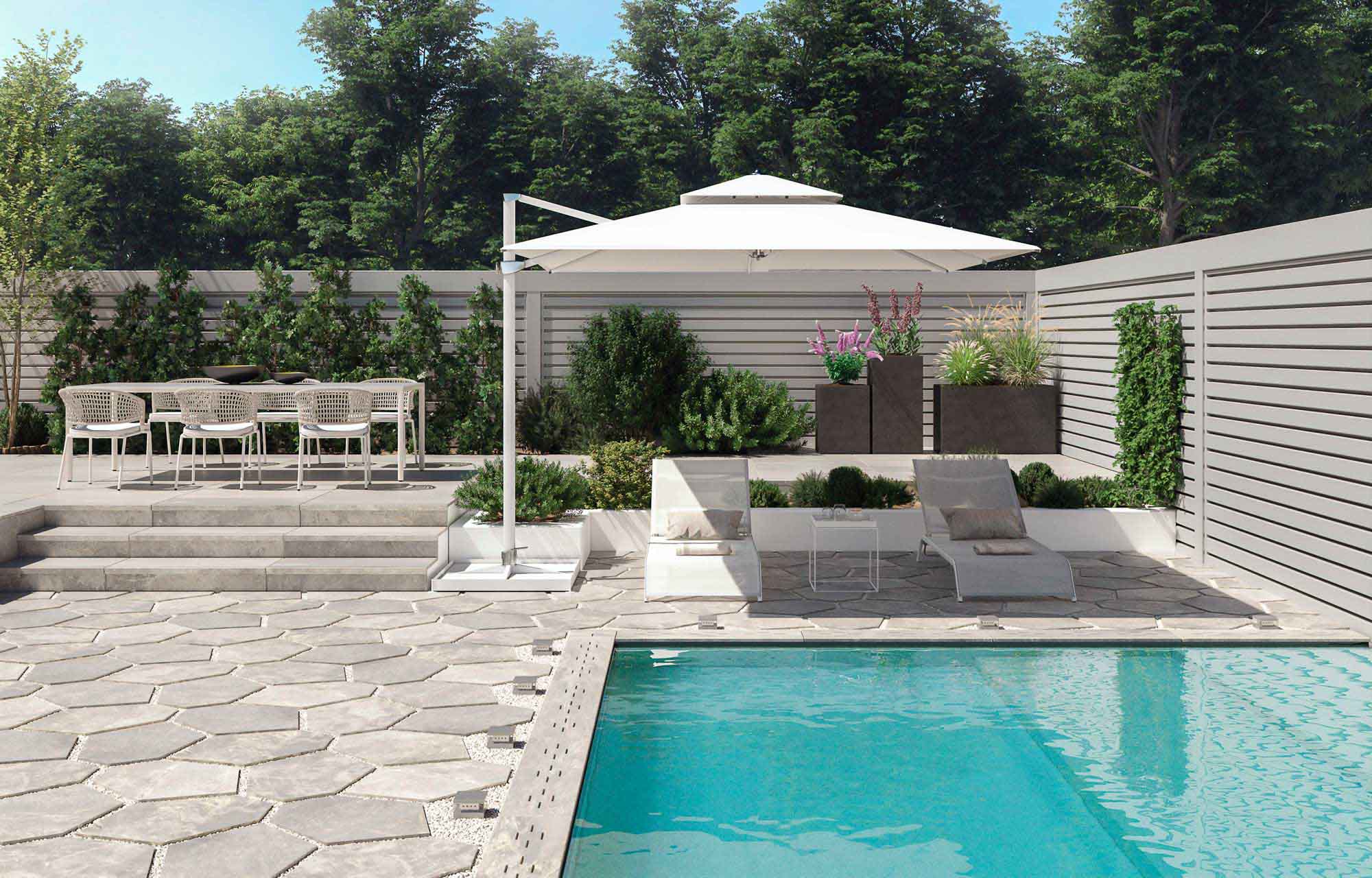
Pool areas: when finished with anti-slip surfaces, they offer safety and stability against moisture, as well as good resistance to temperature changes. Pool flooring must meet specific requirements that influence both material and finish.
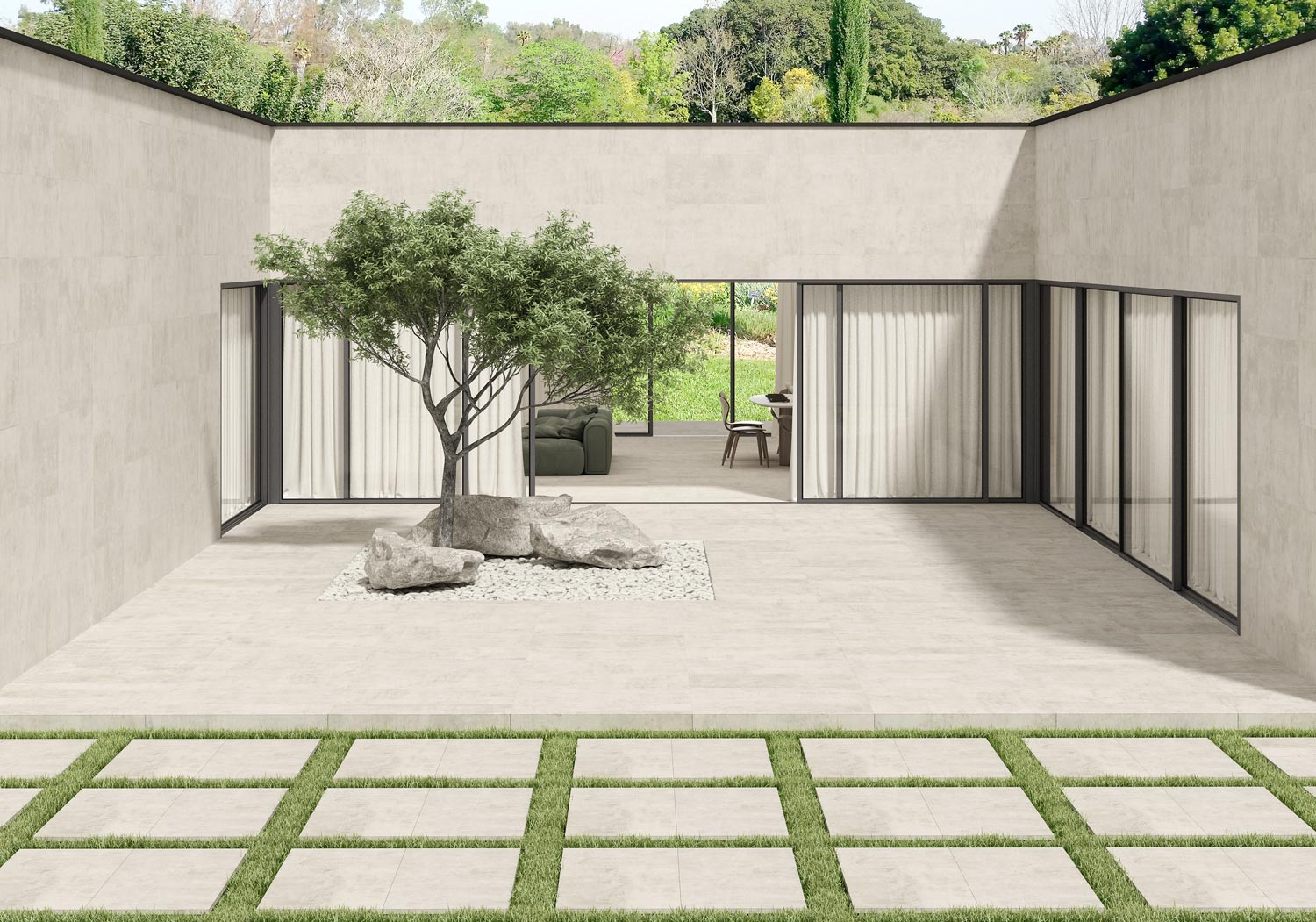
Installation on pedestals, gravel, or grass: these systems enable more flexible solutions adapted to the terrain, improving drainage and allowing the flooring to integrate into outdoor spaces of different scales.
Designs in outdoor stone flooring
Beyond the type of stone, the design of the paving is what truly defines the character of an outdoor space. Starting from the same material inspiration, it is possible to create very different atmospheres, from neutral and continuous surfaces to more decorative or visually expressive compositions.
The development of stone-look porcelain makes it possible to approach these styles with precision, maintaining a coherent reading of the space while adapting to different project scales and design approaches.
Neutral-design outdoor stone flooring
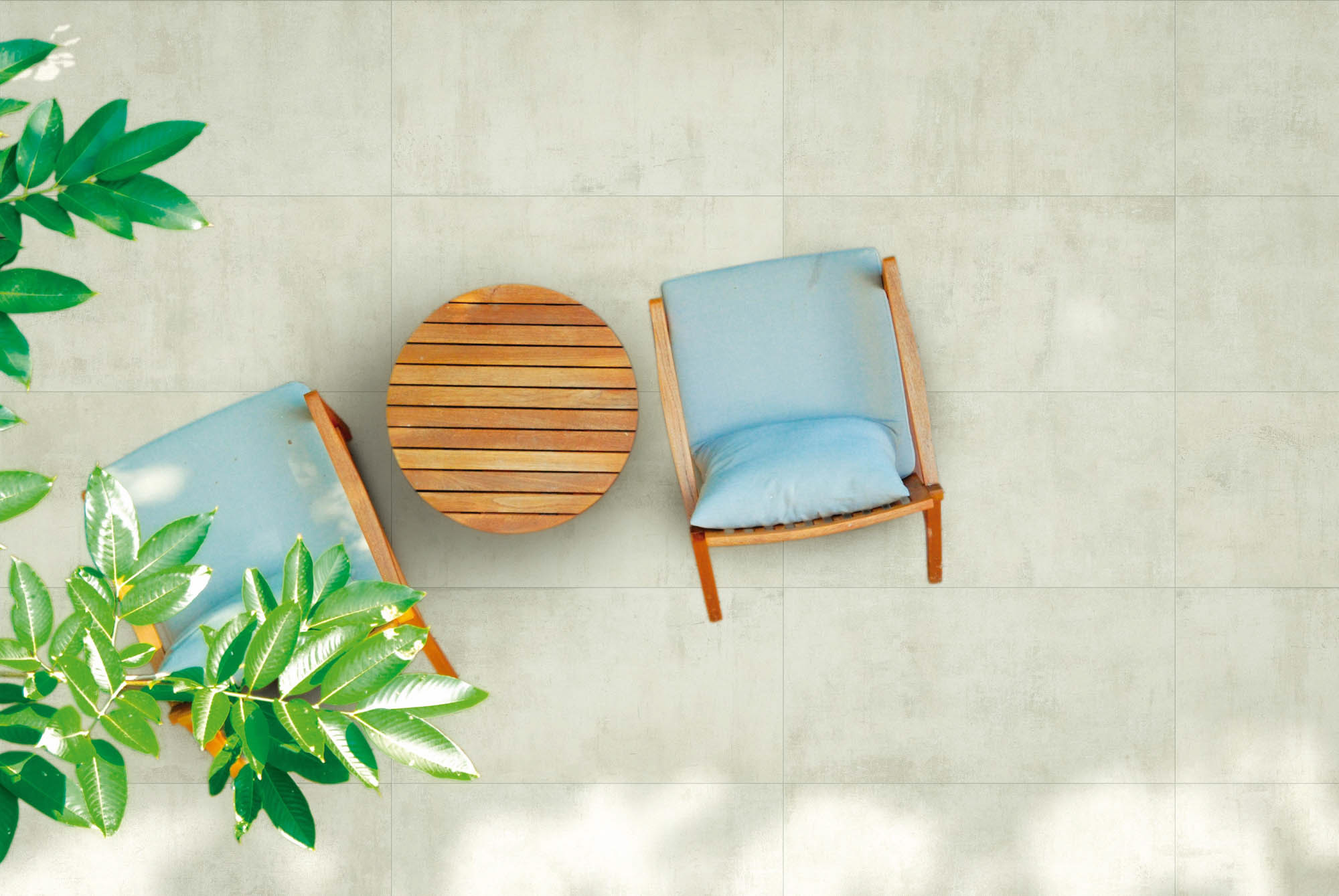
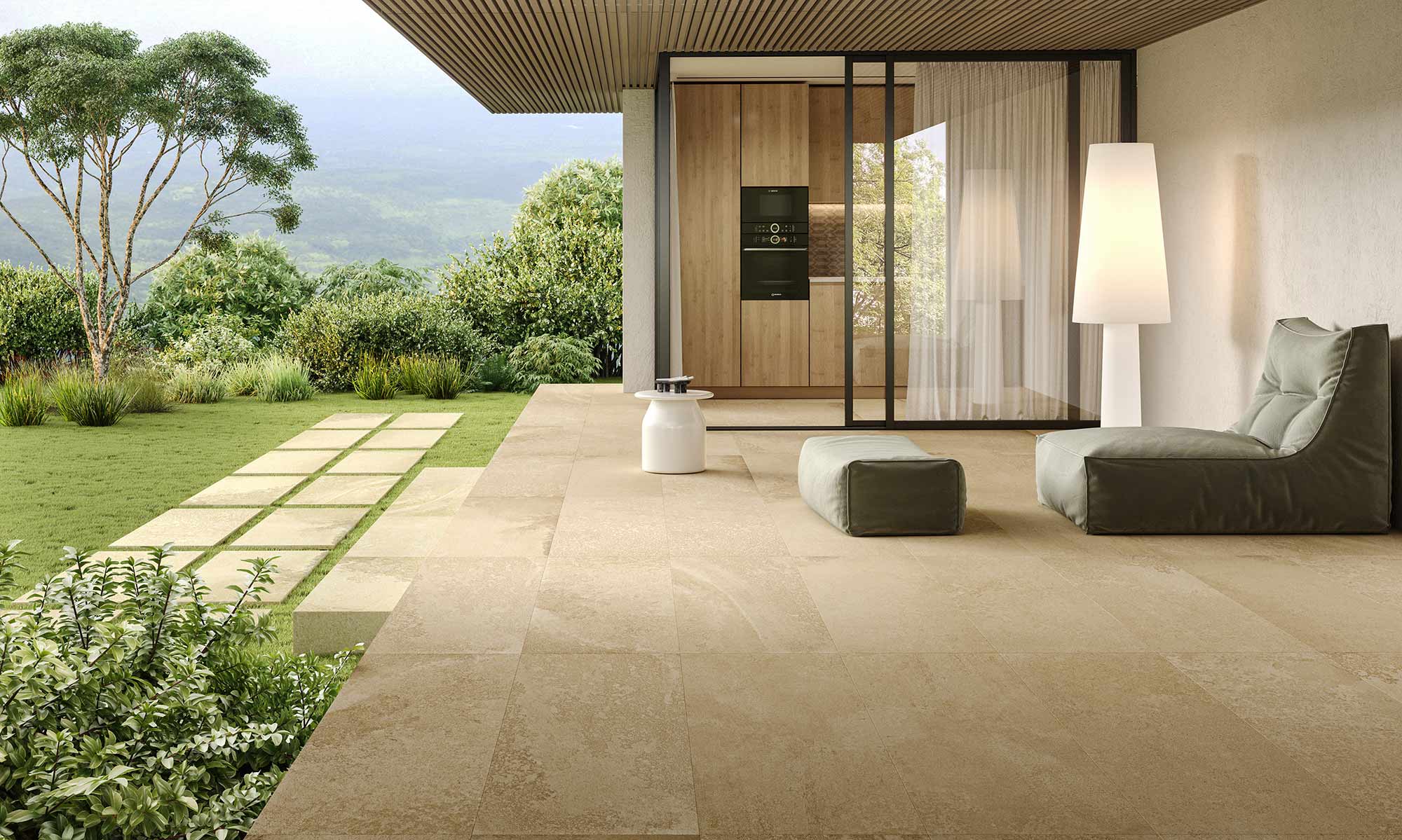
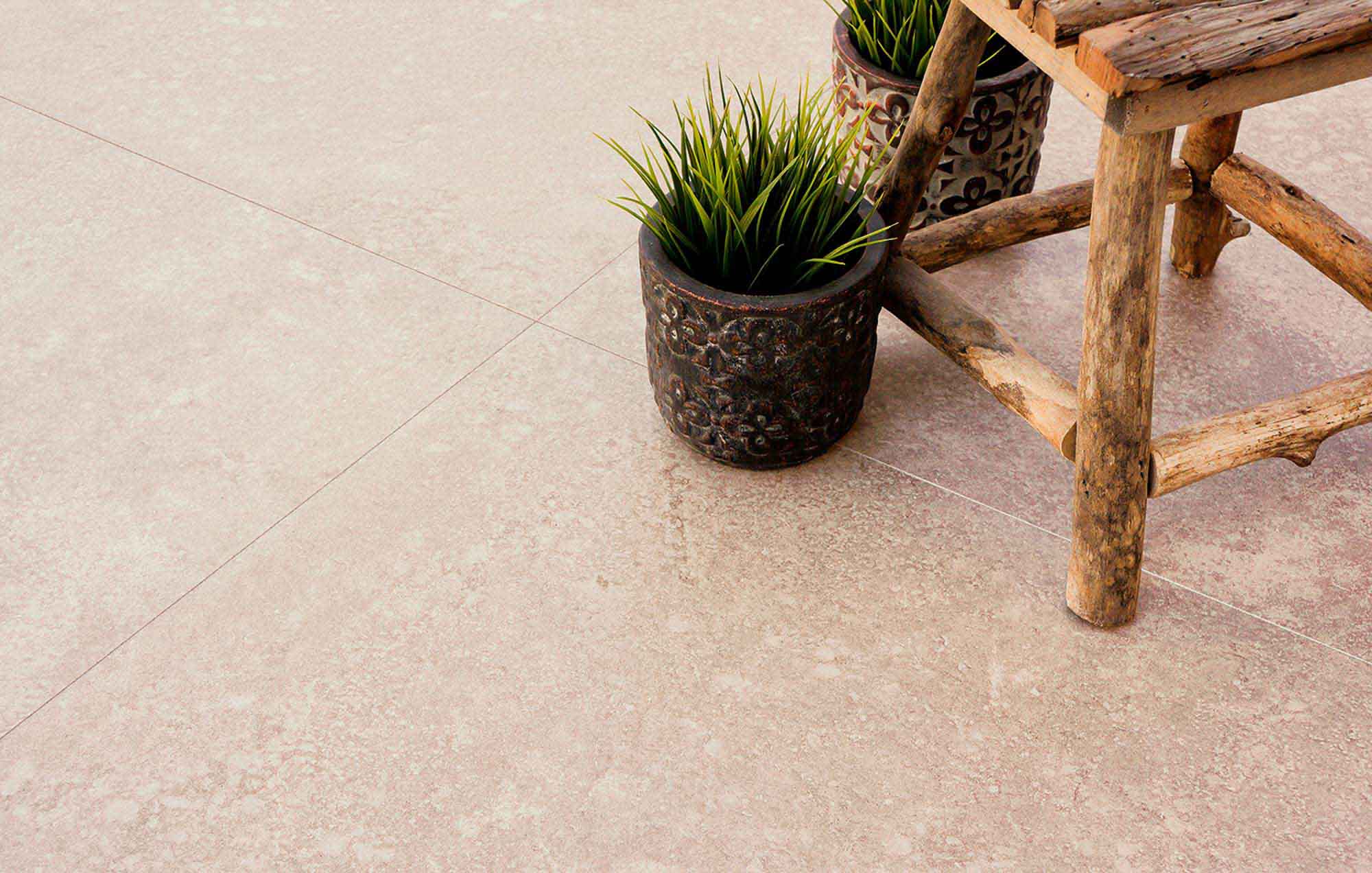
Finishes inspired by stones with a uniform texture allow for the creation of continuous, balanced surfaces, where the flooring supports the overall composition without dominating it. This type of design works especially well in terraces and outdoor areas where visual clarity and natural integration with the architecture are desired.
Within this approach, collections such as Bavaria, inspired by Solnhofen limestone, or Ronda, with very subtle variation between pieces, create flooring that conveys calmness and continuity. Their clean and ordered appearance makes them easy to combine with other materials and design elements within the project.
Slate-design flooring for outdoors
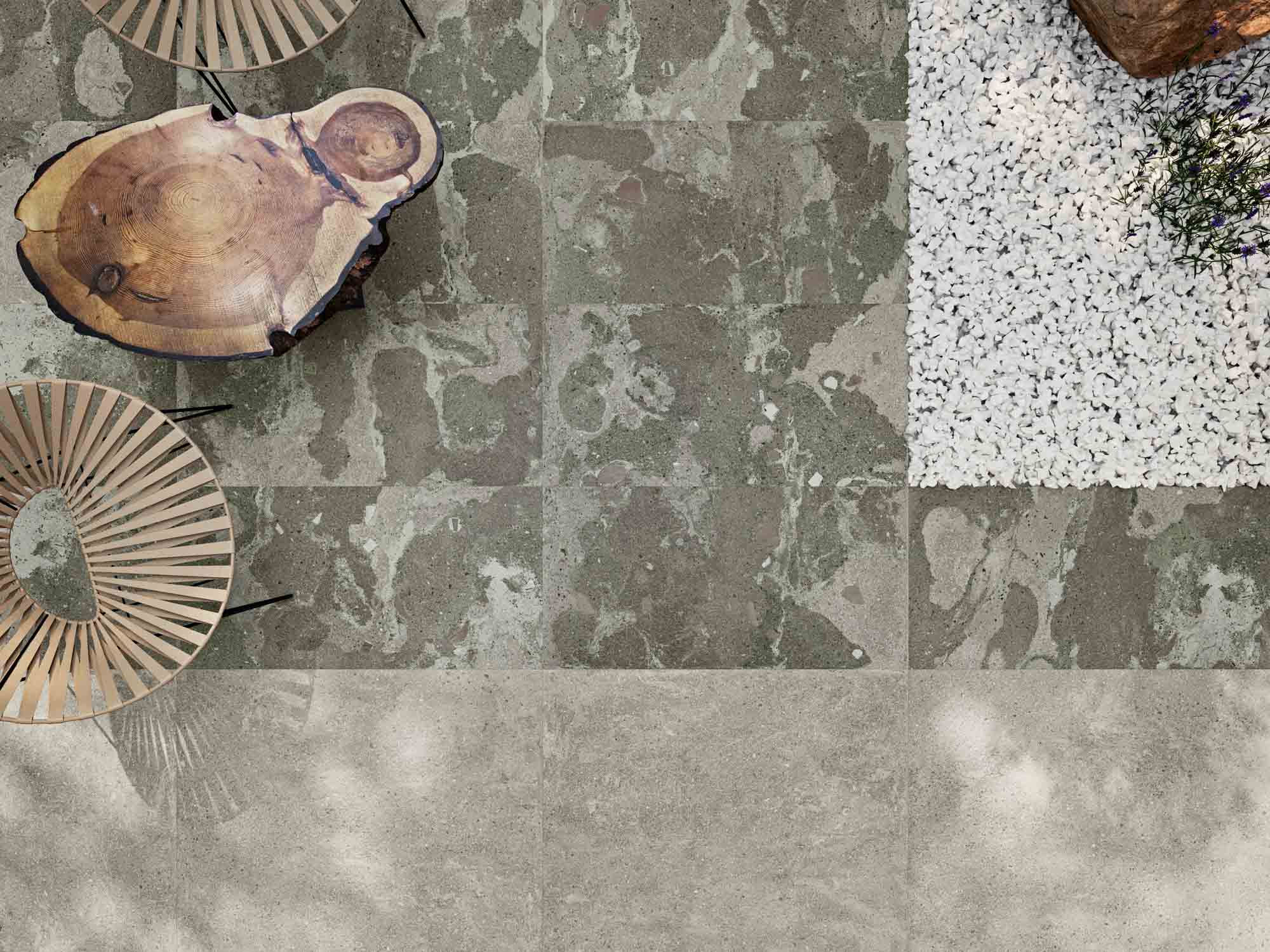
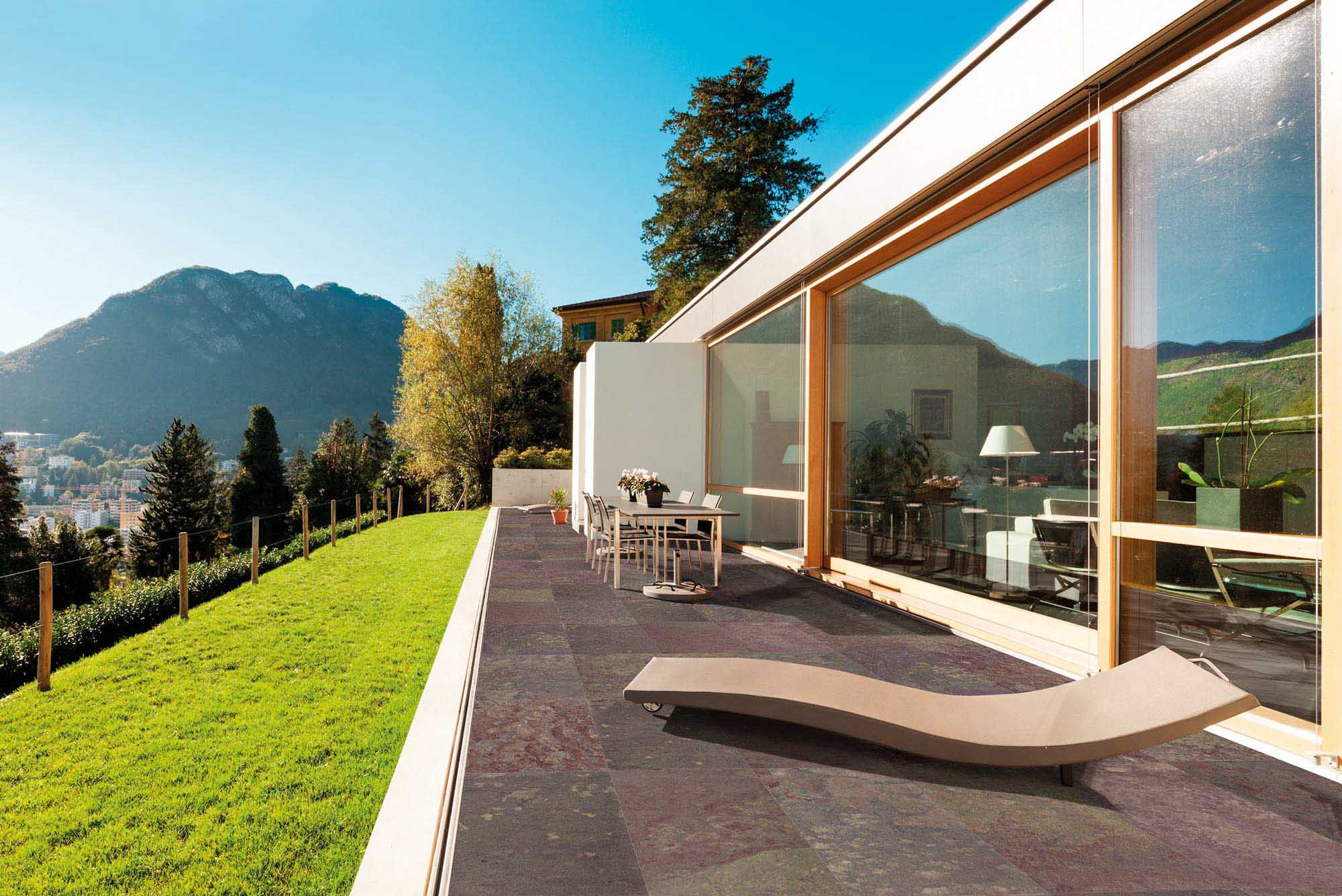
Slate-inspired designs introduce greater richness in texture and contrast, adding character to the surface without losing its natural feel. The finish features more pronounced variations that create dynamism and depth, especially in larger outdoor spaces.
Flooring that reinterprets this type of stone allows for the use of darker tones and a more defined presence, while still maintaining the technical performance required for outdoor use.
Decorative marble-style flooring
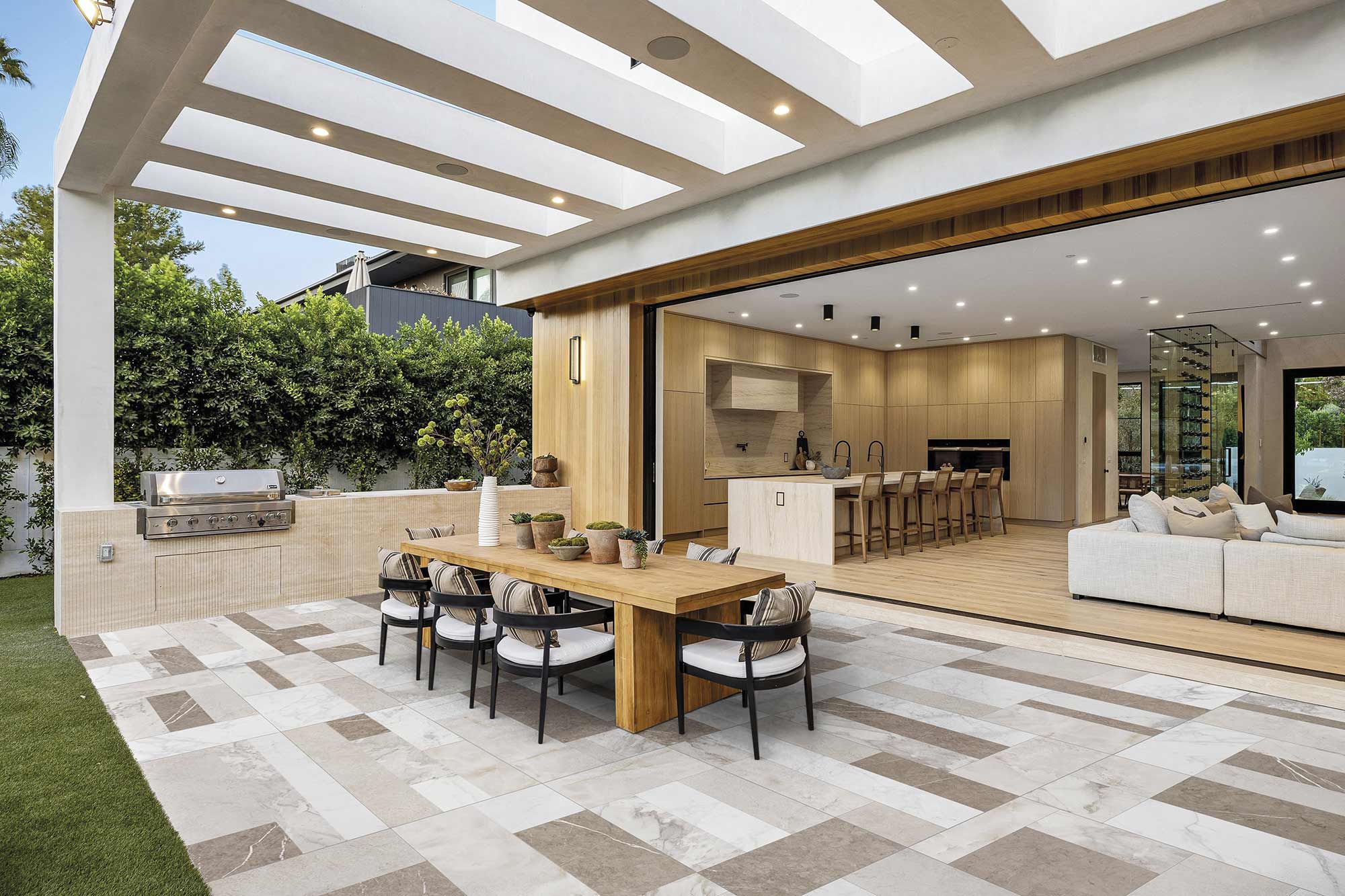
Marble-effect flooring brings a more decorative dimension to outdoor surfaces, introducing patterns and compositions that go beyond a continuous finish. This type of design makes it possible to work with classical references through a contemporary interpretation.
In some cases, these proposals feature large-format compositions that recreate patterns traditionally associated with smaller tiles. This type of paving connects with other decorative outdoor flooring solutions, where design plays a leading role in shaping the character of the space.
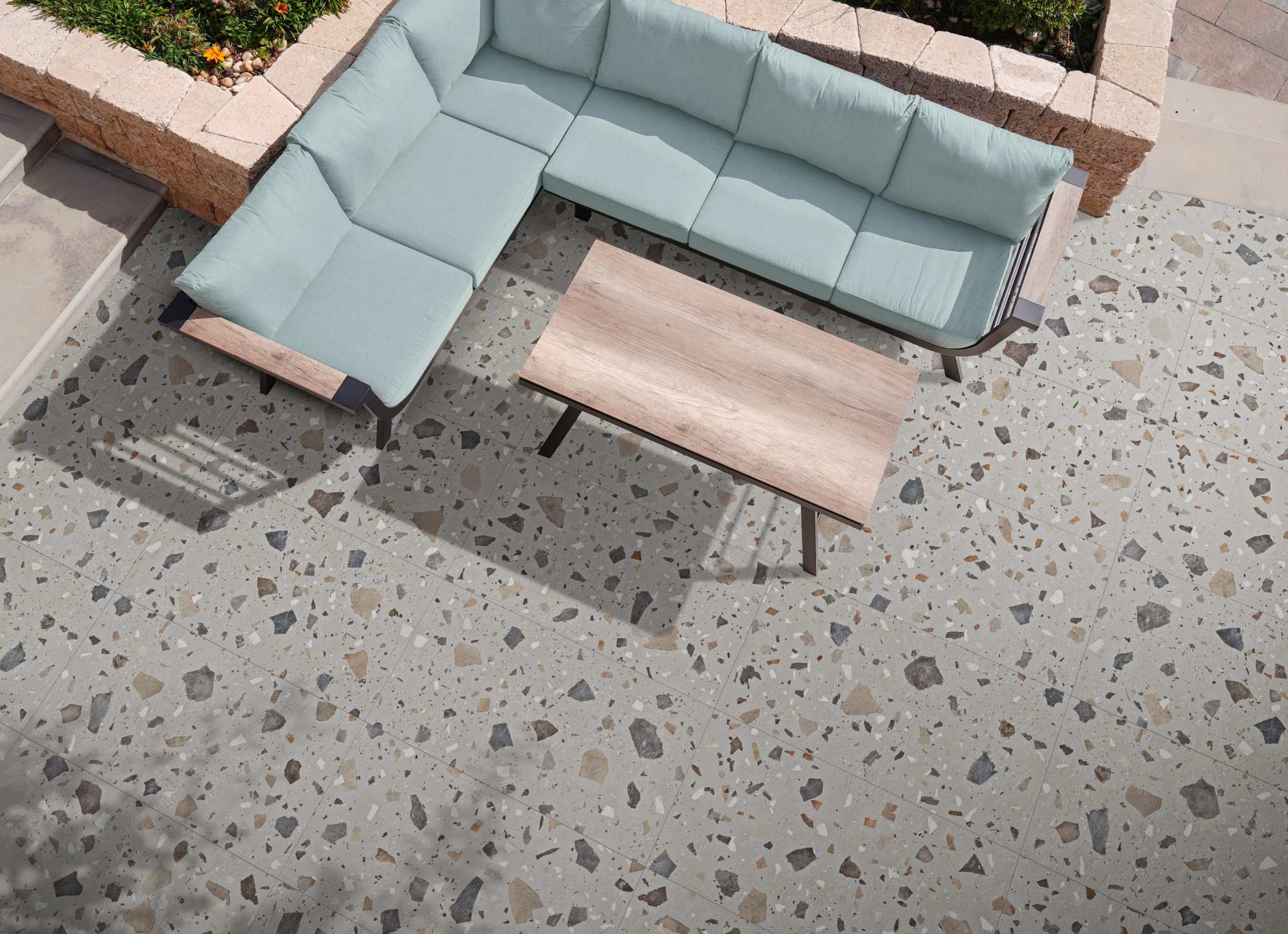
Terrazzo-look flooring for outdoors
Terrazzo-effect tiles introduce a more dynamic interpretation of outdoor flooring. Their composition, based on fragments and chromatic variations, brings movement and greater visual richness, especially in spaces where a contrasting focal point is desired.
This type of design helps break away from more uniform surfaces and creates outdoor environments with stronger personality, while still maintaining a coherent material base.
Stone-look flooring with geometric patterns for outdoors
Beyond surface finishes, outdoor paving can incorporate geometric patterns that completely transform the perception of space. The use of special-format pieces makes it possible to design more complex compositions, introducing rhythm and structure into the flooring.
Outdoor collections allow for the development of shapes such as trapezoids, hexagons, or more organic compositions, which integrate seamlessly into the overall paving layout. These solutions add architectural value and make it possible to adapt the design to landscape projects of different scales.