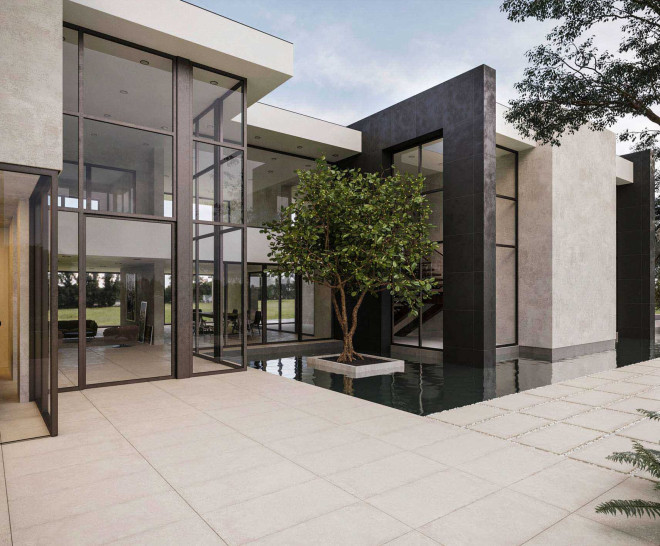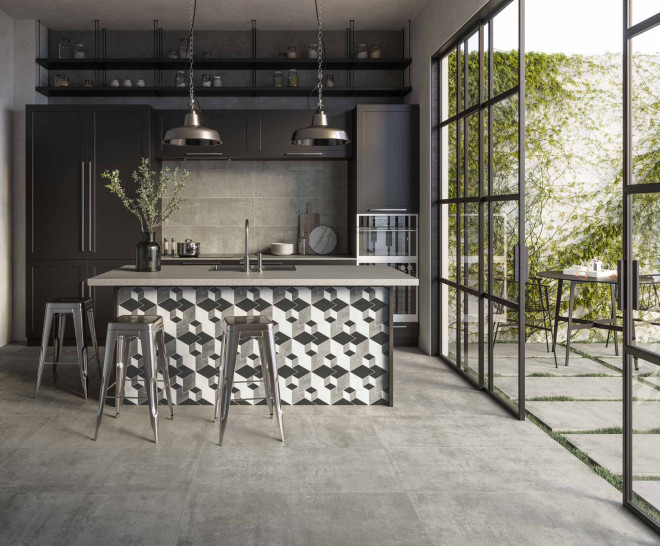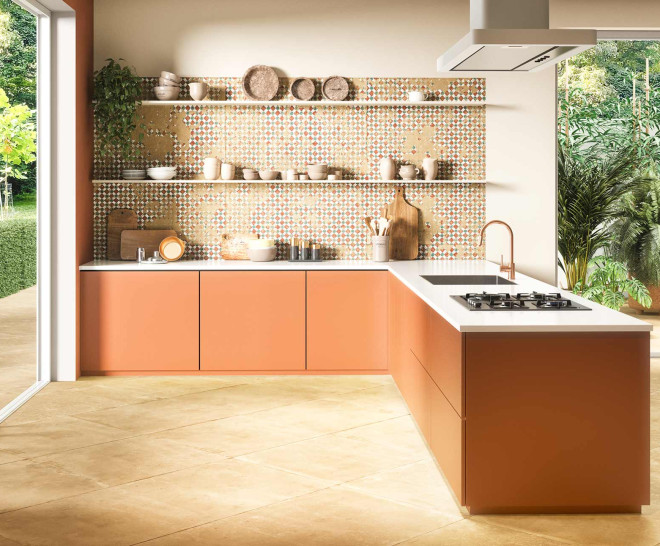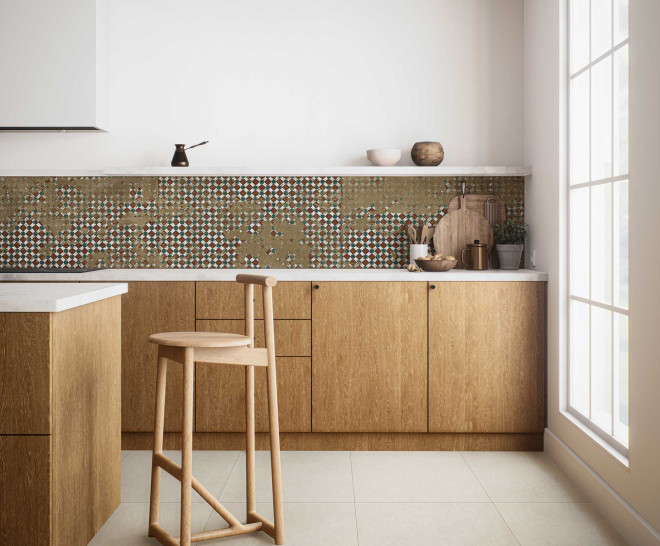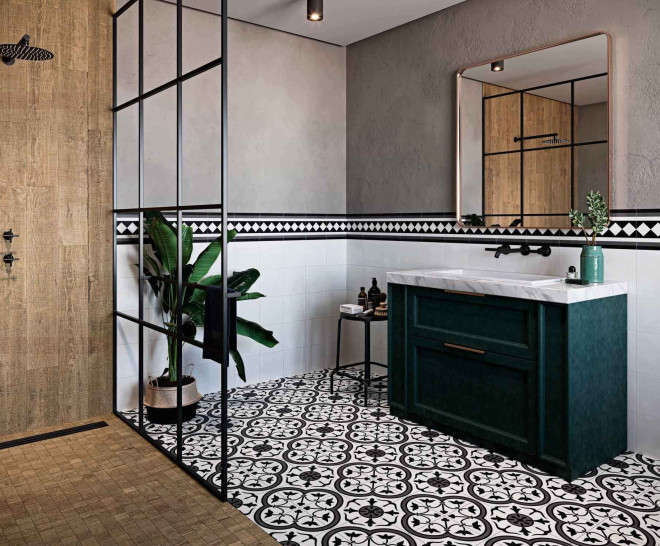
Decorative wall coverings have become one of the most popular design resources for adding personality and character to interior spaces. Through textures, reliefs, patterns, or nature-inspired materials, they make it possible to transform ordinary surfaces into standout features with a strong visual presence within an interior design project.
From nature-inspired designs to geometric, rustic, or neoclassical styles, the range of possibilities continues to expand. In this article, we explore some of the most interesting trends and share ideas for decorating home walls with style, elegance, and consistency.
Rado
Decorative Wall Covering Ideas for Every Style
Decorative wall coverings make it possible to adapt a wall to a wide range of interior design styles, from concepts inspired by natural materials to compositions with a strong classical influence. The right choice will depend on the atmosphere you want to create and the level of visual impact you wish the surface to have within the space.
Natural Inspiration: Stone and Wood
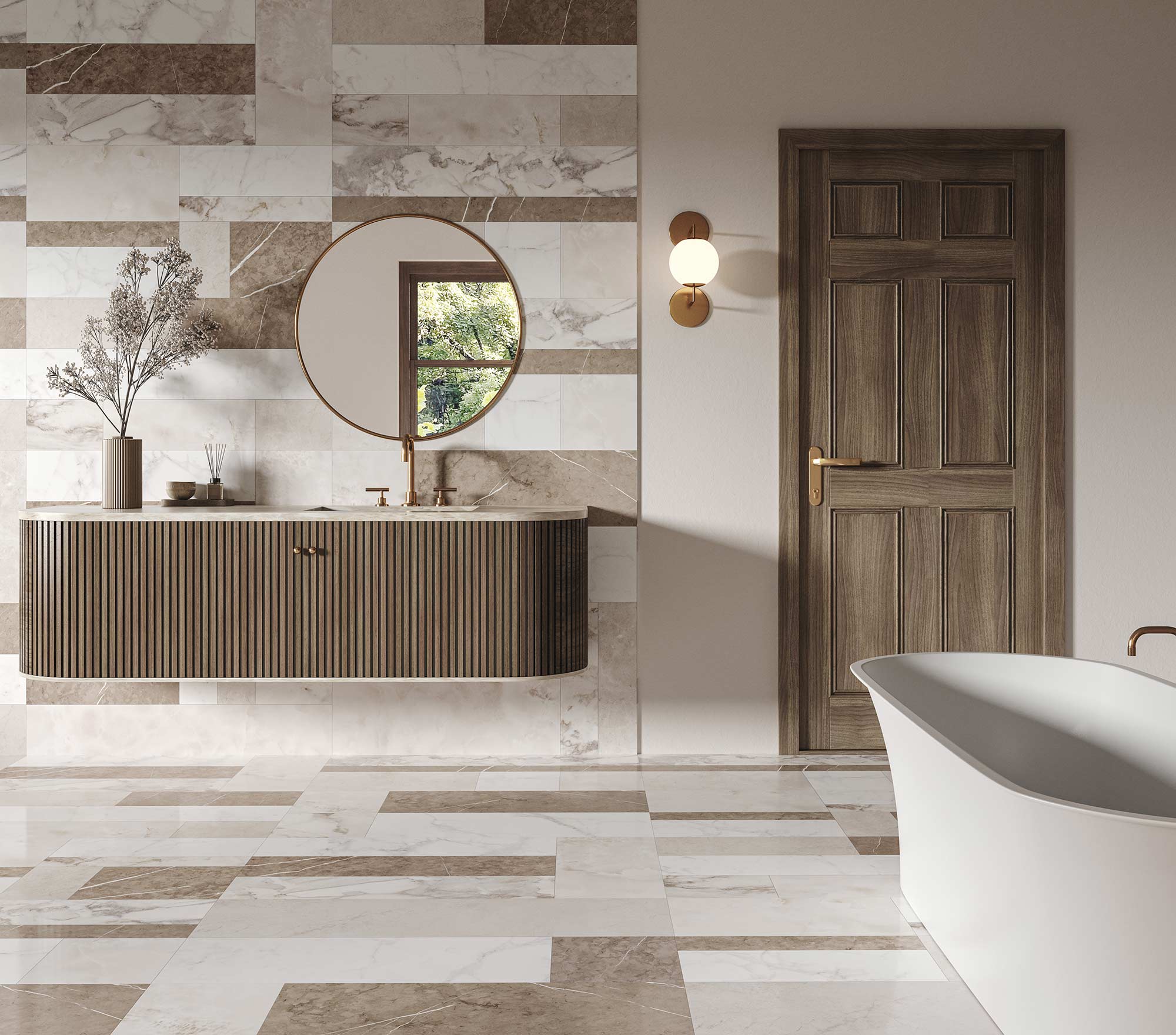
Stone and wood remain two of the most influential sources of inspiration in interior design. While stone-inspired surfaces bring texture, authenticity, and character, wood-look wall coverings help create warm and inviting environments. This trend is also reflected in decorative solutions such as slatted wall panels and wood-effect ceramic coverings, both of which are becoming increasingly popular in contemporary homes.
Ibiza
Reliefs and Three-Dimensional Designs
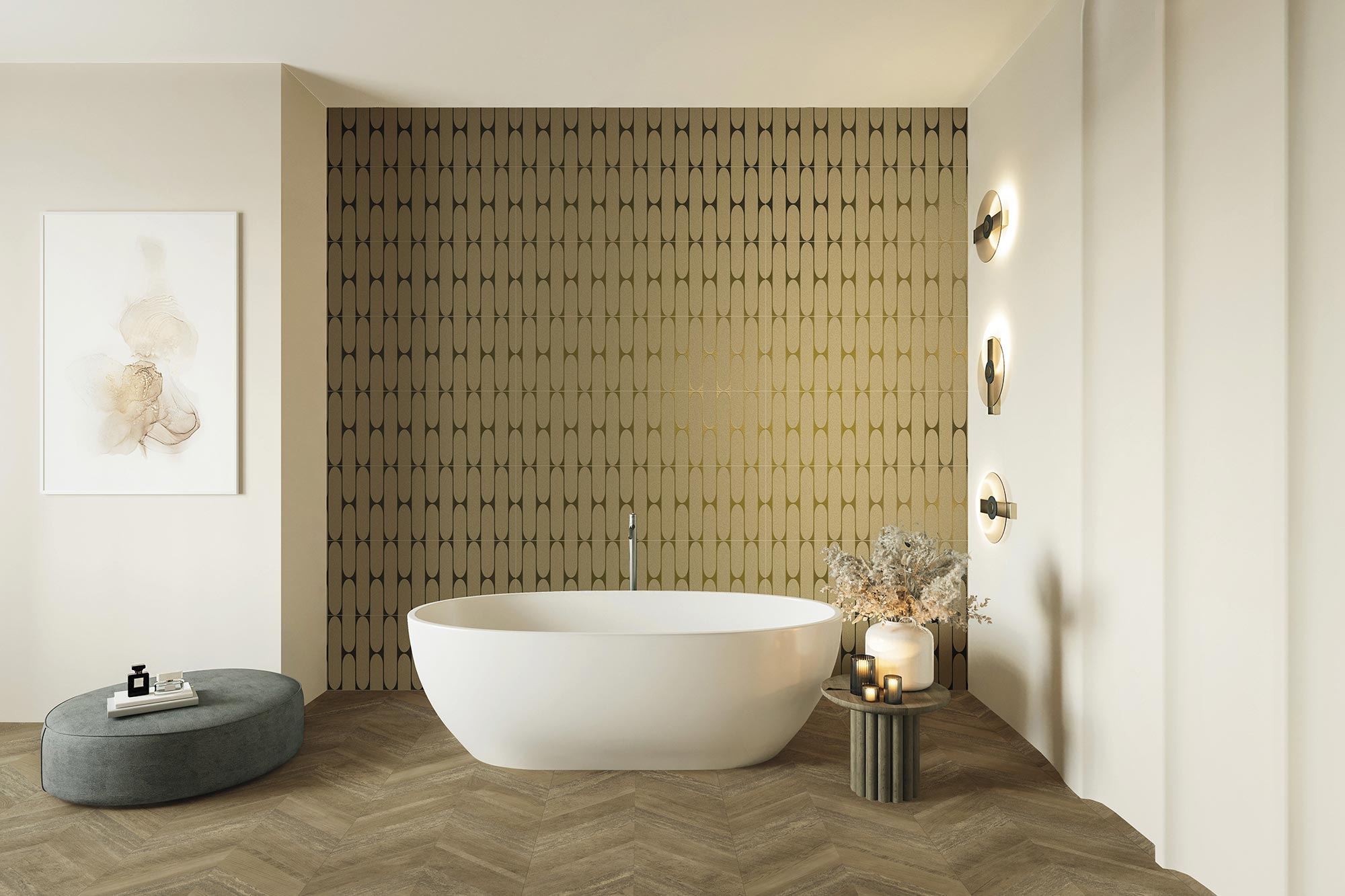
Textured wall coverings make it possible to introduce visual depth and dynamism without relying on bold colors or additional decorative elements. The interplay of light and shadow enhances the surface, creating subtle visual interest and turning the wall into a focal point within the space.
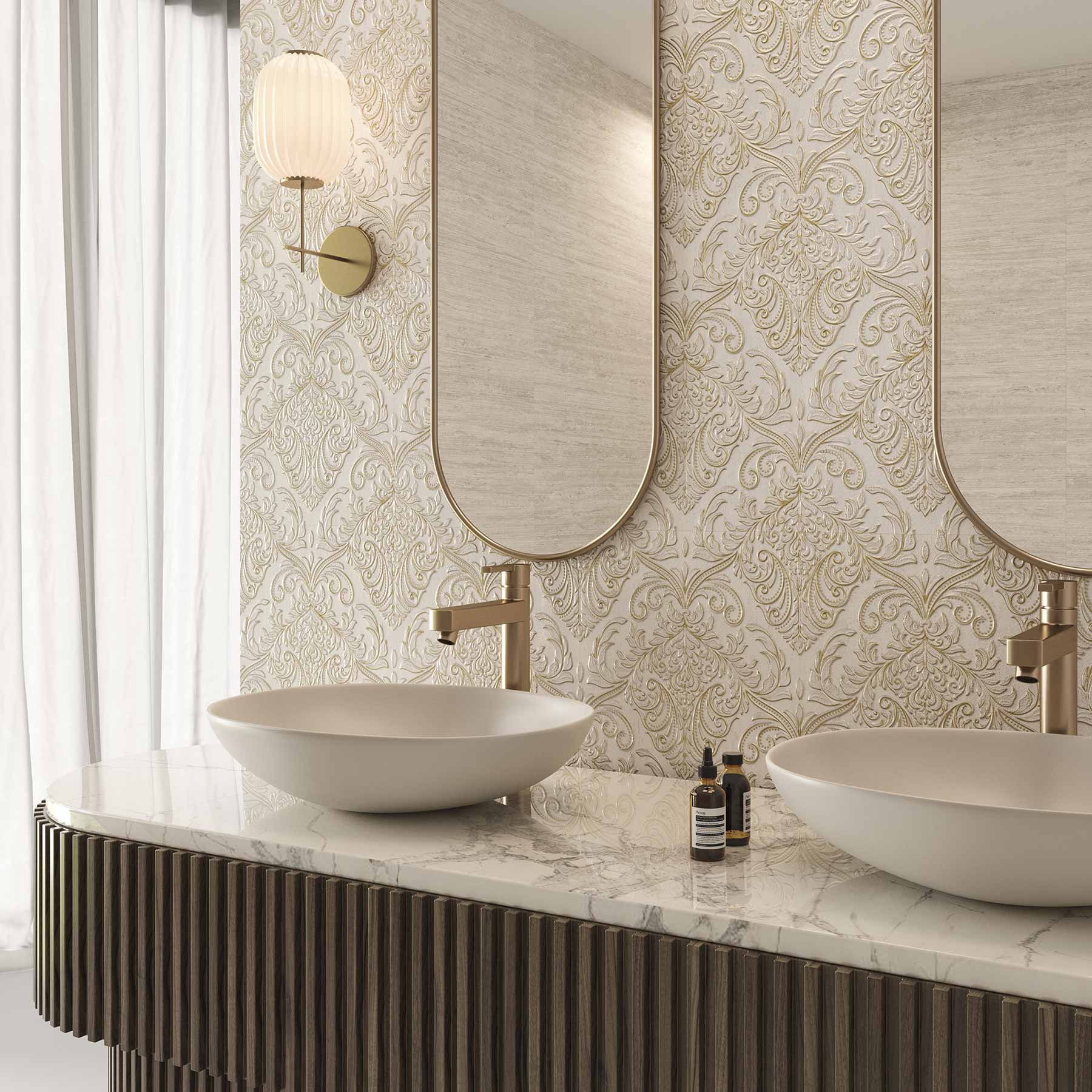
Umbria
Neoclassical Style
The enduring appeal of the neoclassical style demonstrates that timeless elegance continues to play a prominent role in contemporary interior design. Reinterpreted moldings, symmetrical compositions, and highly decorative wall coverings help create sophisticated spaces that seamlessly blend tradition with modernity.
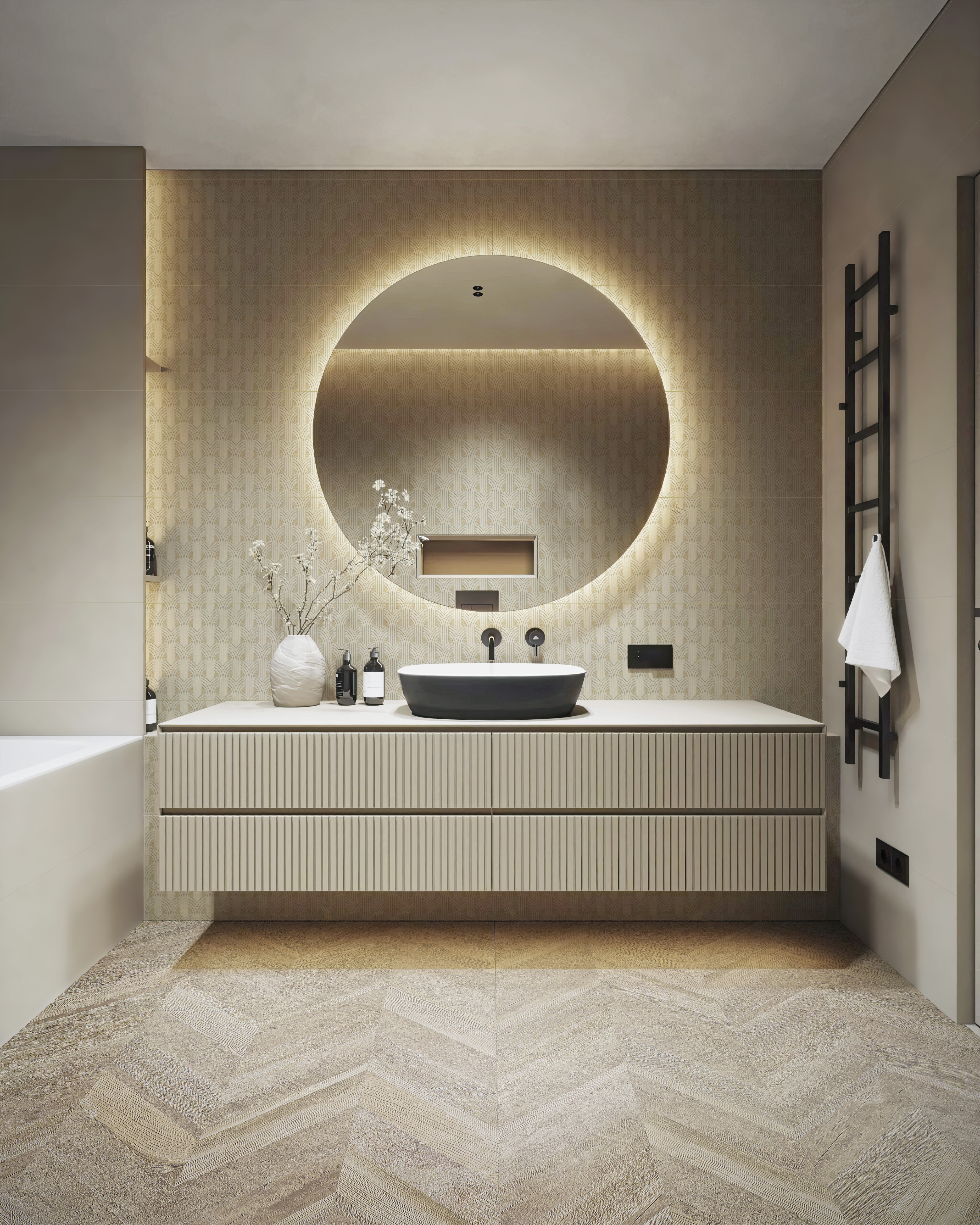
Feel
The Return of Rustic Finishes
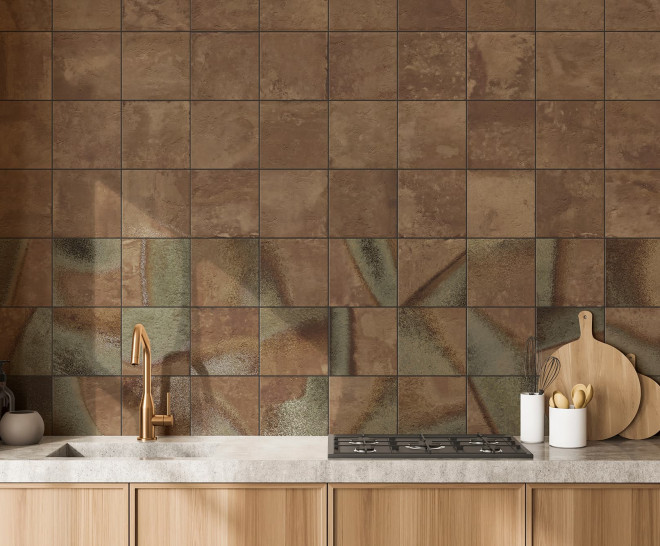
Finishes inspired by terracotta, craftsmanship, and traditional materials are experiencing a resurgence, driven by the growing popularity of Mediterranean-style interiors. Moving beyond more conventional interpretations, today’s designs embrace soft color palettes, refined surfaces, and a seamless integration into contemporary living spaces.
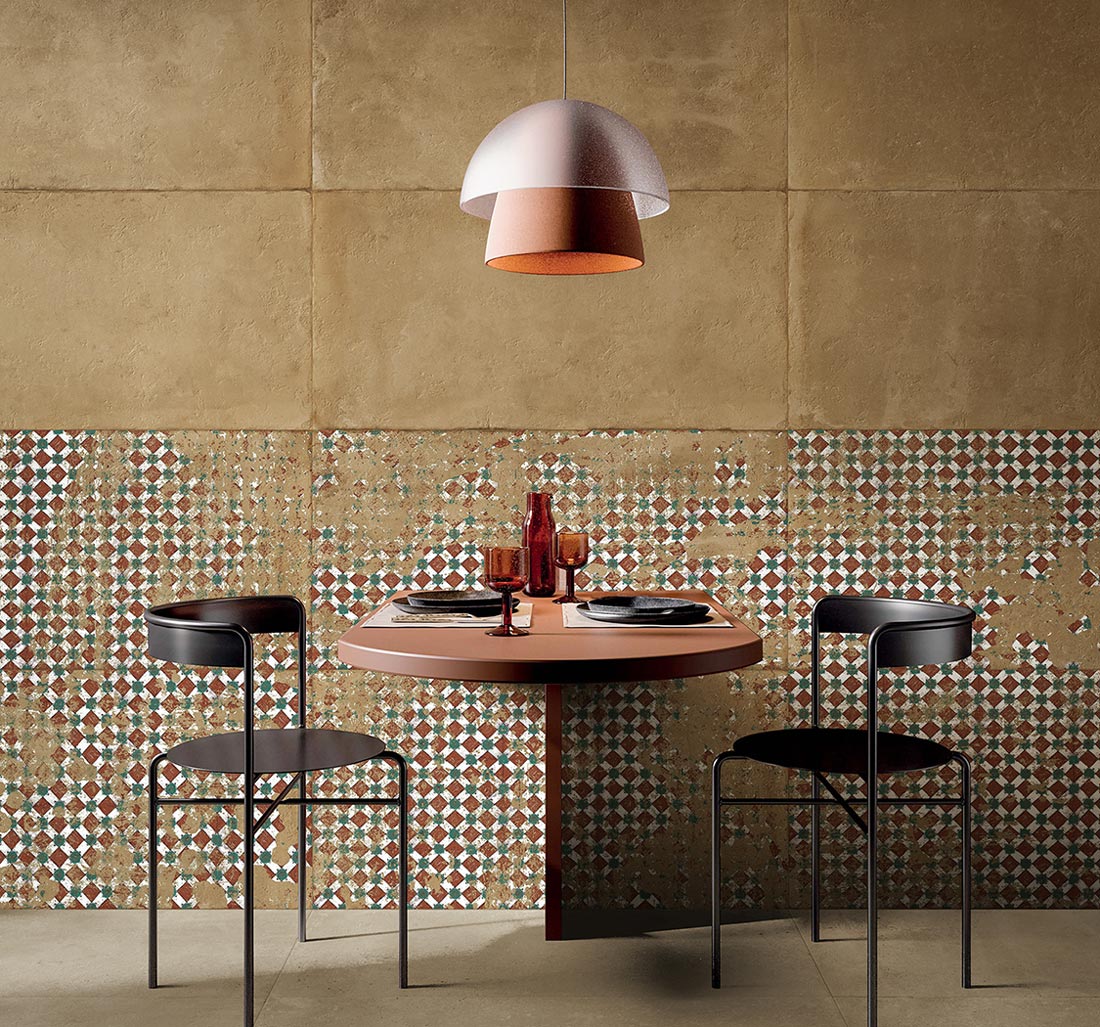
Zest
Trends in Decorative Wall Coverings
Decorative wall coverings are constantly evolving, embracing new ways of interpreting the relationship between design, volume, and materiality. Among the most prominent current trends are textured surfaces, large-format designs, and solutions inspired by natural materials, all capable of adding character without relying on excessive decoration.
As Carla Aparici, Project Manager at Aparici, explains, “More and more projects are using wall coverings to introduce texture, visual rhythm, and contrast, turning the wall into an active element within the overall composition.”
Decorative ceramic surfaces are also gaining increasing prominence. Thanks to the wide variety of finishes available, today’s ceramic wall coverings make it possible to create highly diverse compositions, ranging from understated contemporary interiors to designs inspired by classical or handcrafted aesthetics.
Along the same lines, decorative-effect tiles have established themselves as one of the most versatile solutions for introducing texture, visual rhythm, and personality into residential wall design.
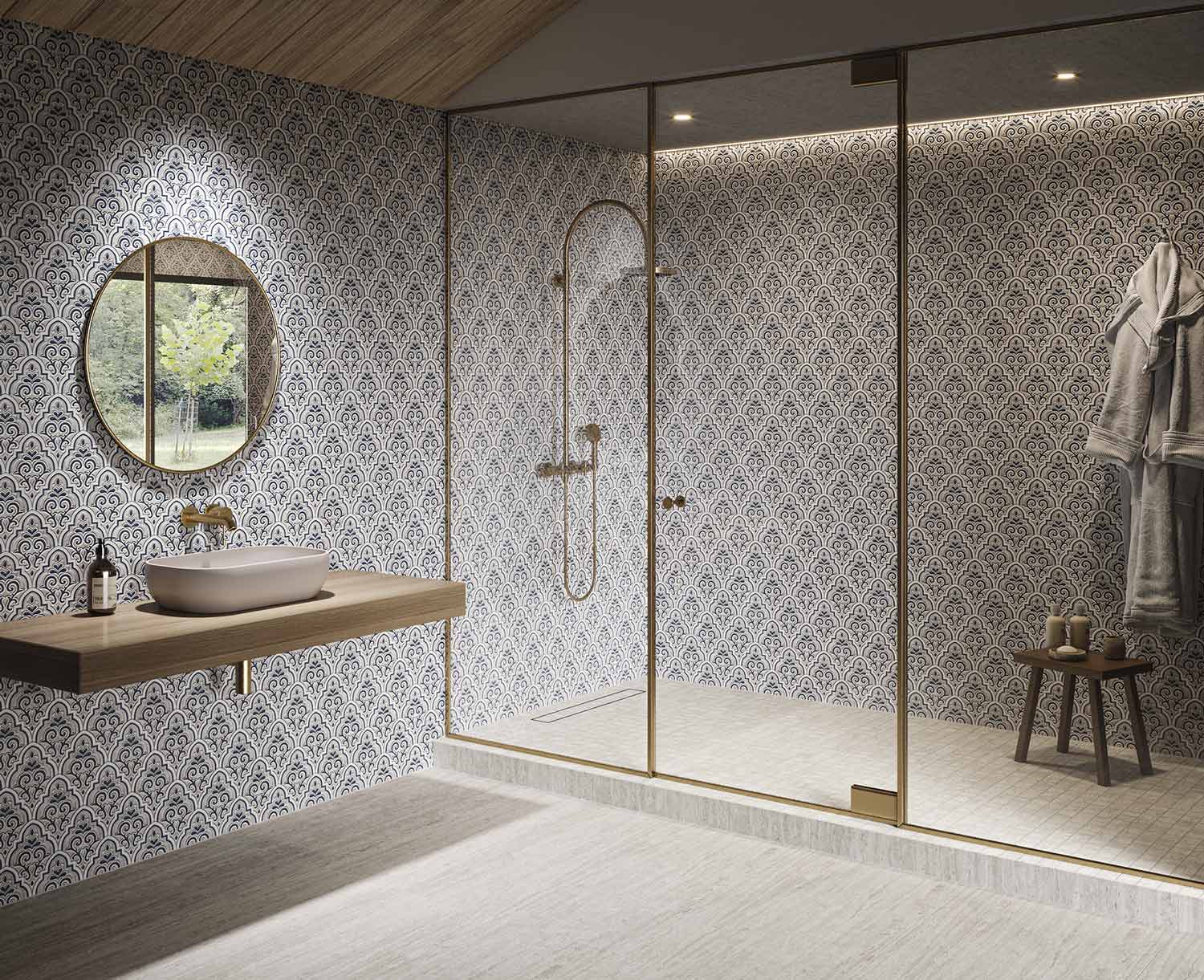
Ona
Ideas for Decorating Home Walls
Decorative wall coverings make it possible to tailor each wall to the specific needs and character of a room. From social spaces such as the living room to more private areas like the bedroom, a thoughtfully designed surface can become one of the most distinctive features of an interior design project.
Living Rooms with Character
The living room often brings together some of the most representative elements of a home, making a decorative feature wall an effective way to reinforce its identity. Textured surfaces, geometric patterns, and finishes inspired by natural materials are among the most popular solutions for reimagining modern living room walls with tiles, creating focal points that add character and visual interest without overwhelming the space.
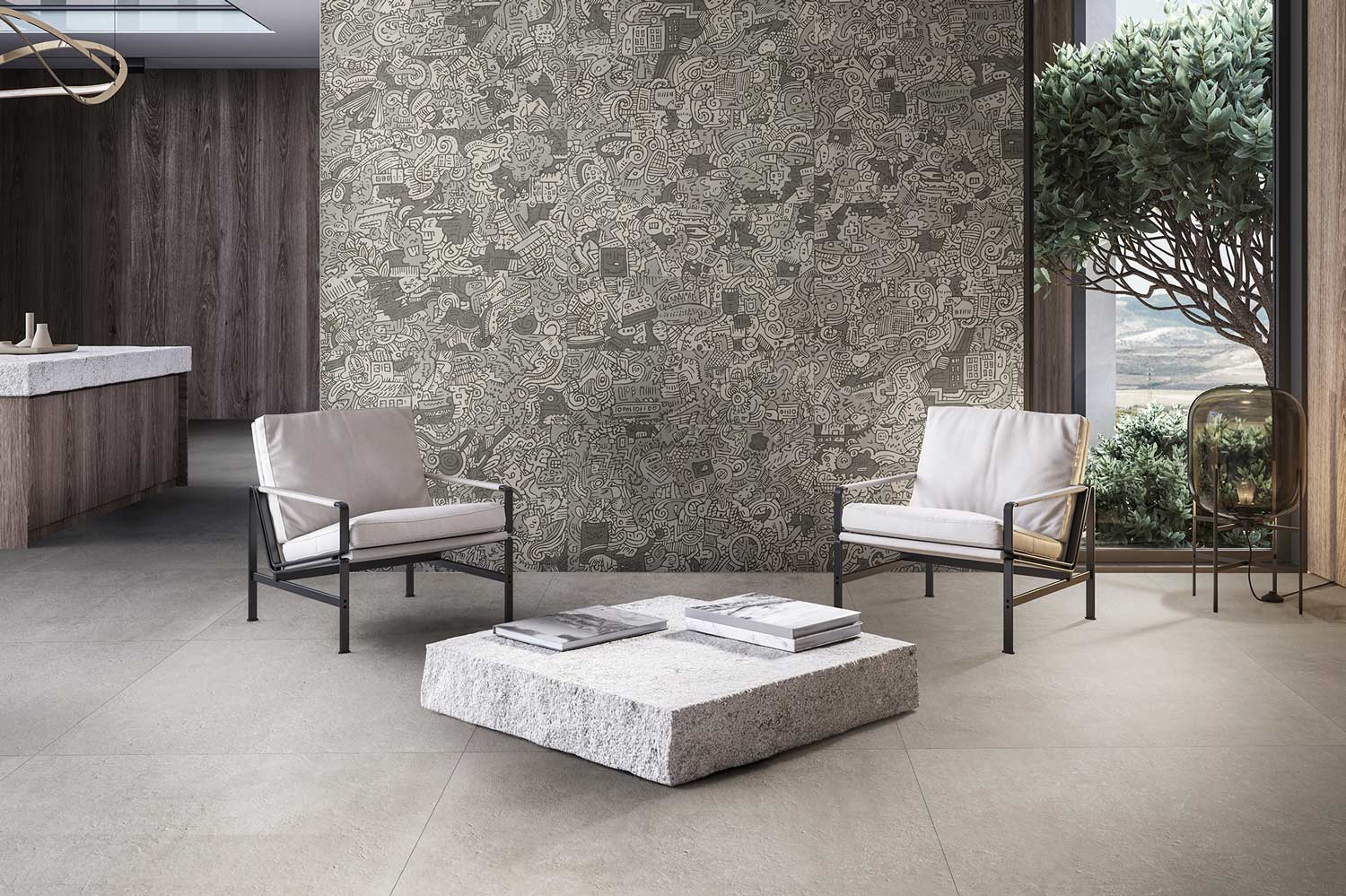
Ciment
Kitchens Beyond the Backsplash
Today’s kitchens offer far more decorative possibilities than the areas traditionally associated with wall coverings. While tiled kitchen backsplashes remain one of the most popular design solutions, decorative wall coverings can also be used to highlight entire wall sections, define dining areas, or enhance the overall character of the space. The choice of kitchen wall tiles plays a key role in shaping the room’s aesthetic, helping to establish a cohesive and distinctive design style.

Rado
Bathrooms with Character
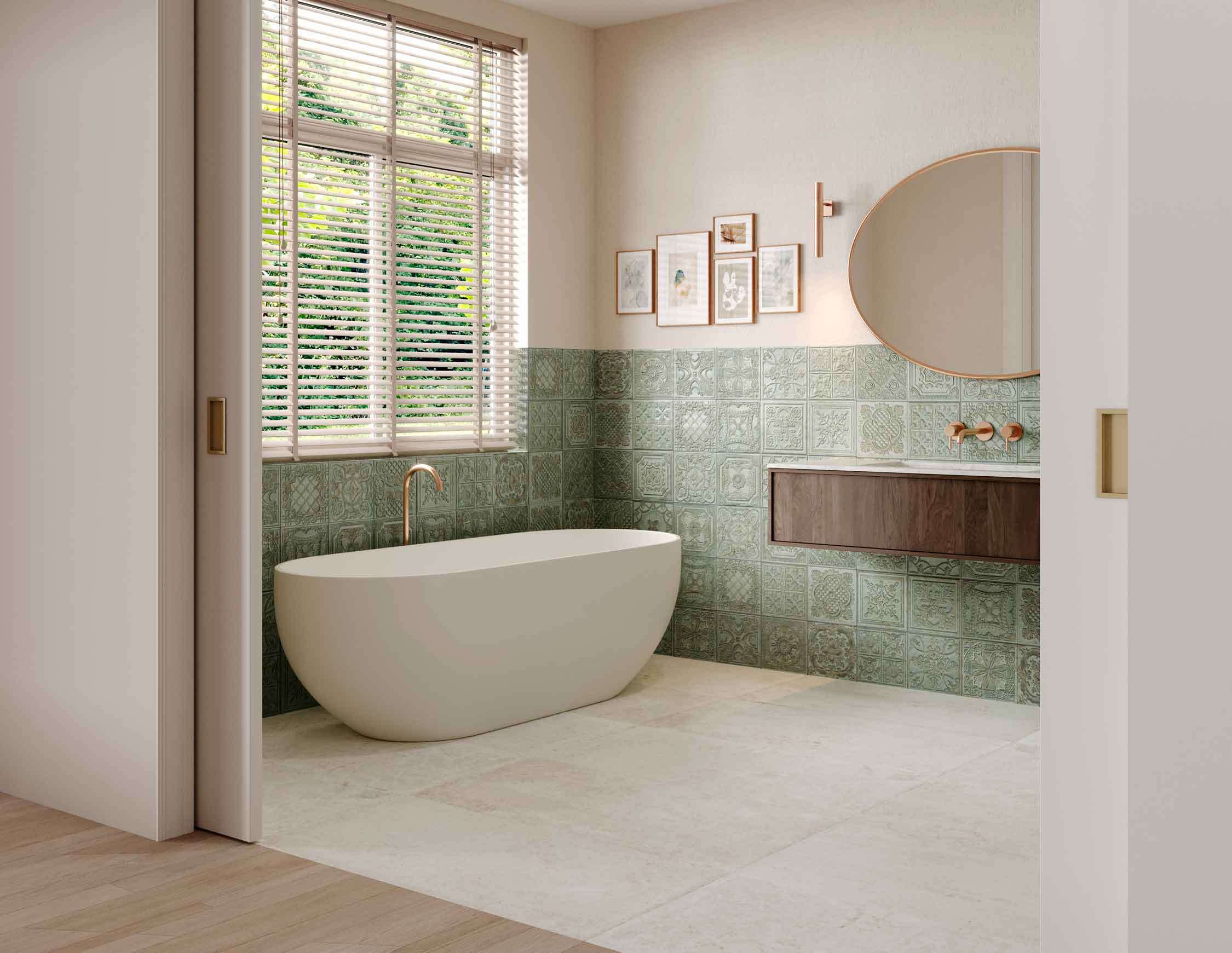
Decorative wall coverings make it possible to bring personality to the bathroom without compromising functionality. The use of decorative bathroom tiles helps highlight specific surfaces and create compositions with a strong visual identity. This approach is particularly effective in areas such as the shower, where the choice of shower tiles can transform a purely functional space into one of the most striking features of the overall design.
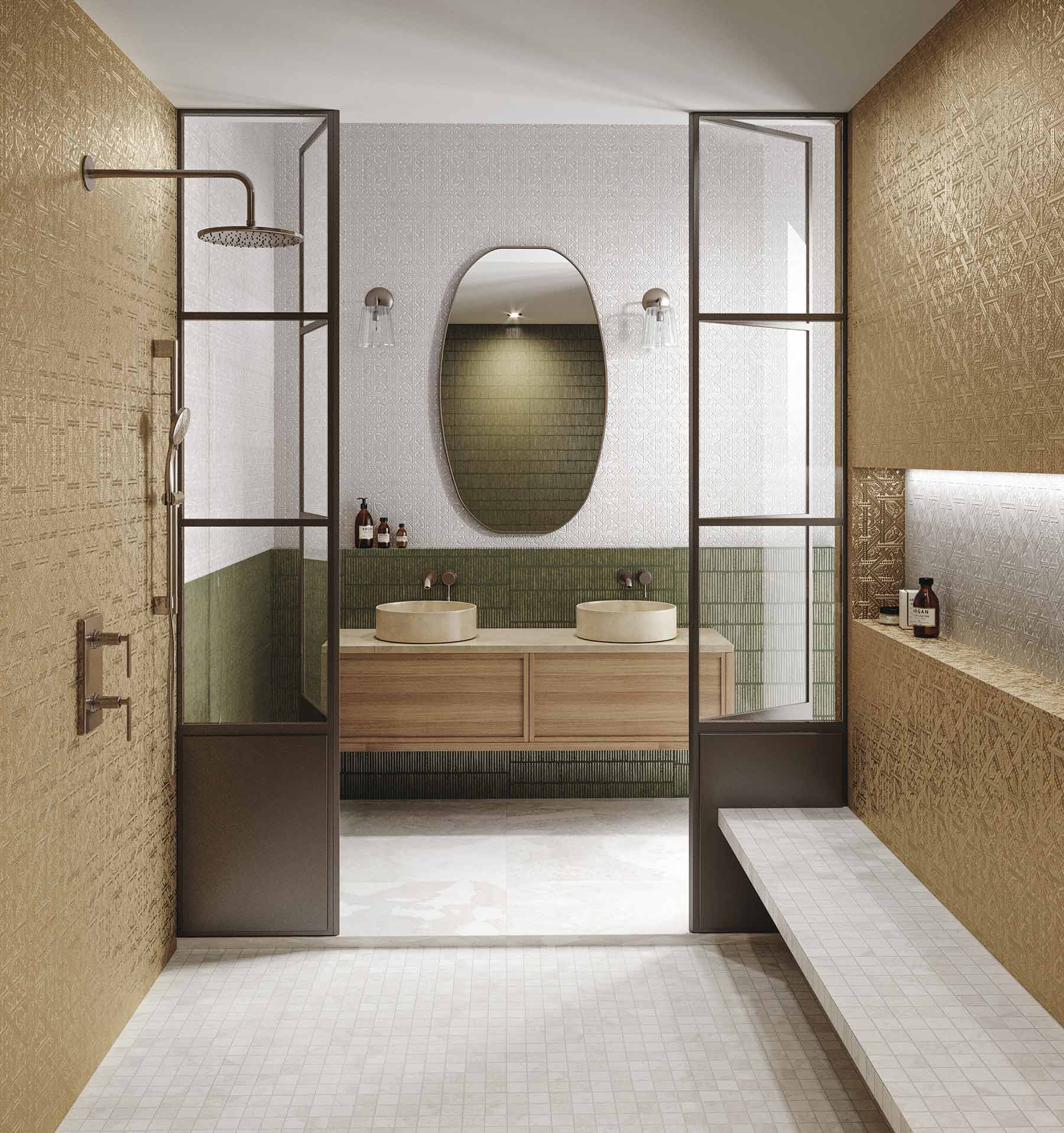
Opal
Cozy Bedrooms
In bedrooms, the headboard wall often serves as the focal point of the decorative scheme. Wall coverings featuring texture, relief, or natural-inspired finishes can enhance this surface and align with many of today’s trends in modern headboard design, where the wall is no longer just a backdrop but an integral part of the overall composition.
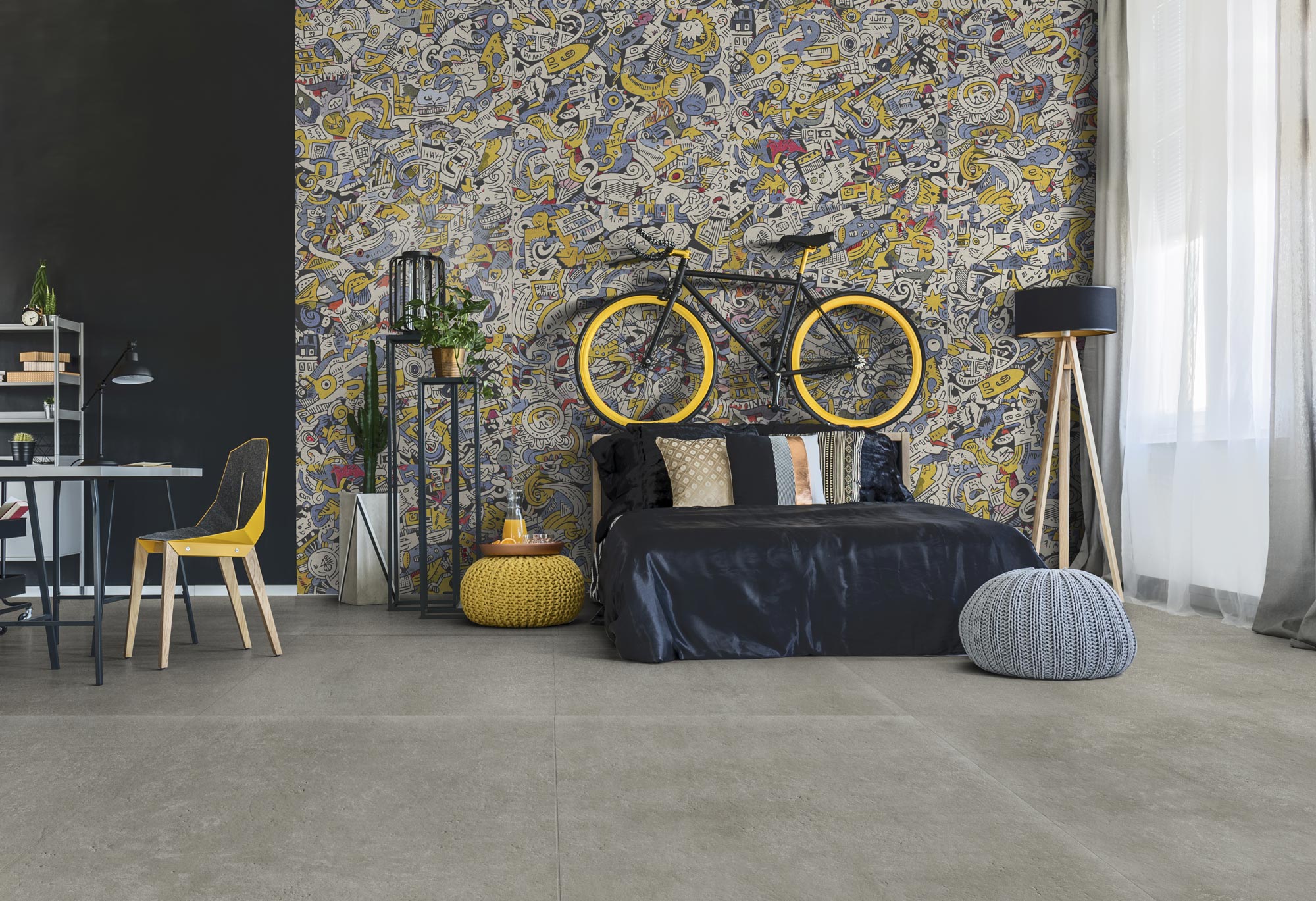
Ciment
Outdoor Spaces Full of Character
The pursuit of character and individuality is no longer limited to interior spaces. Terraces, façades, courtyards, and transitional areas also provide opportunities to incorporate decorative surfaces that enhance the architectural identity of a project. In this regard, façade tile solutions demonstrate how wall coverings can become one of the most distinctive and defining features of an overall design.
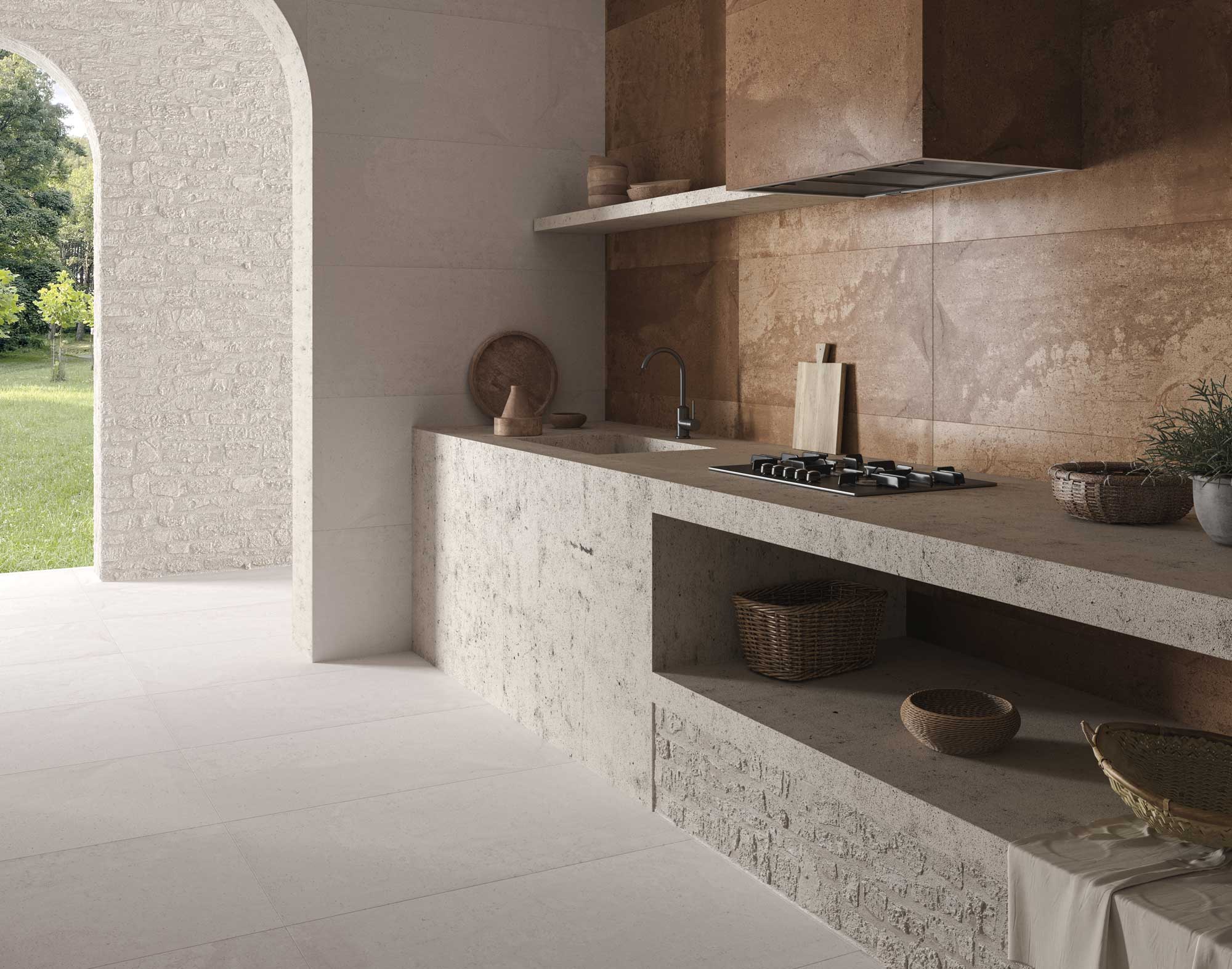
Urano
How to Create a Feature Wall Without Overwhelming the Space
A decorative wall can become the main focal point of a room. Achieving this effect does not require covering every surface; in many cases, a single feature wall is enough to add personality and define the character of the space.
Reserve decorative wall coverings for a single wall or a specific area of the room.
Ensure harmony between colors, materials, and furniture to create a balanced and cohesive design.
Use textures, reliefs, or decorative patterns as the primary visual element, avoiding competition with other strong design features.
Take advantage of lighting to highlight the nuances, depth, and volume of the surface.
Adjust the visual impact of the wall covering according to the size and function of the space.
Gatsby
In summary, decorative wall coverings offer endless possibilities for transforming an ordinary surface into a feature with its own distinct identity. Through textures, reliefs, natural-inspired finishes, or classical influences, they make it possible to create unique and characterful spaces while maintaining a cohesive and harmonious overall design.