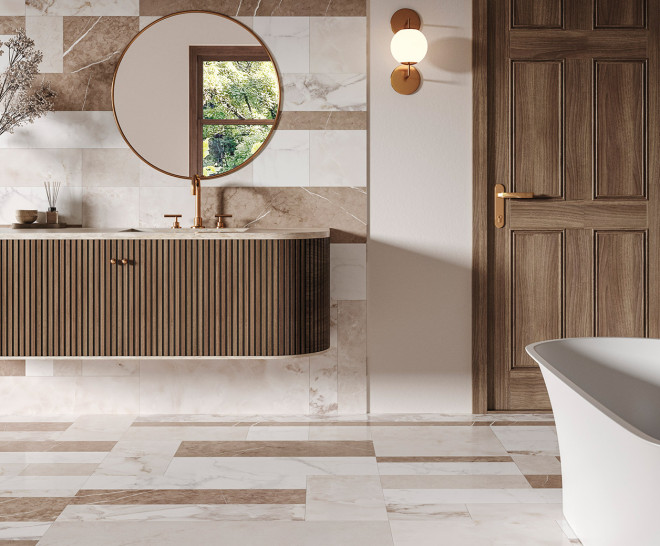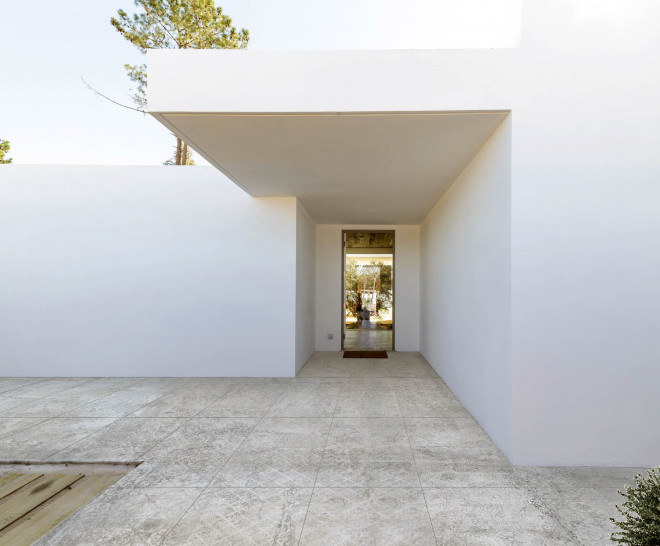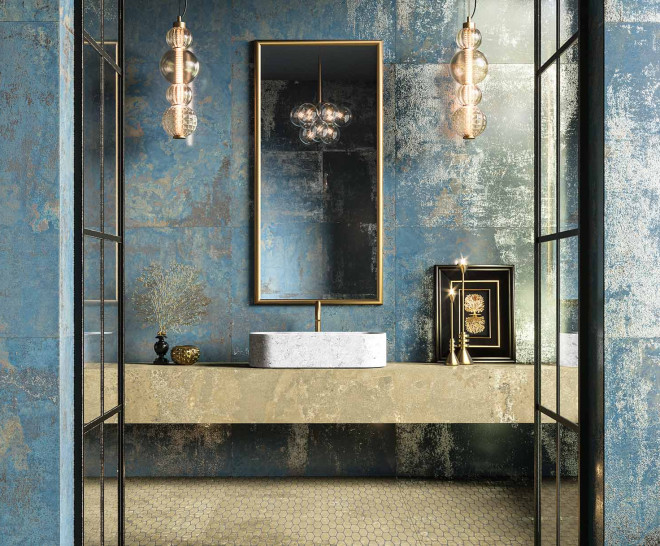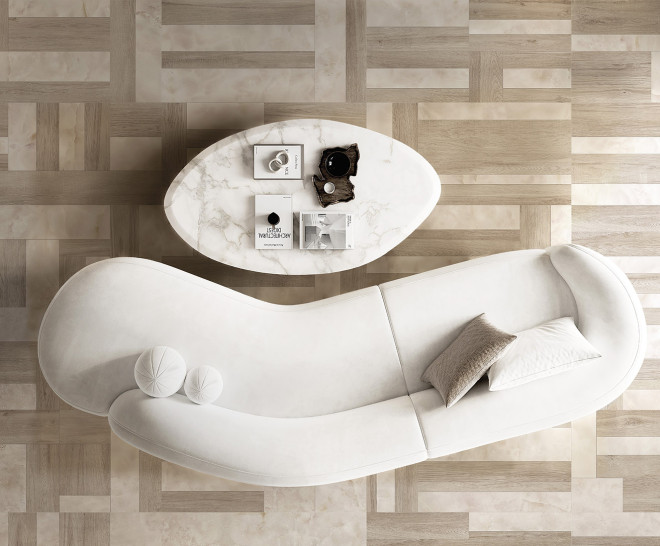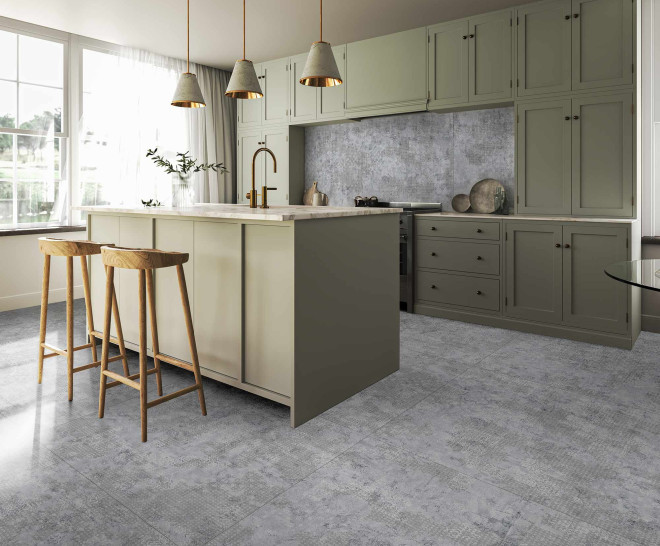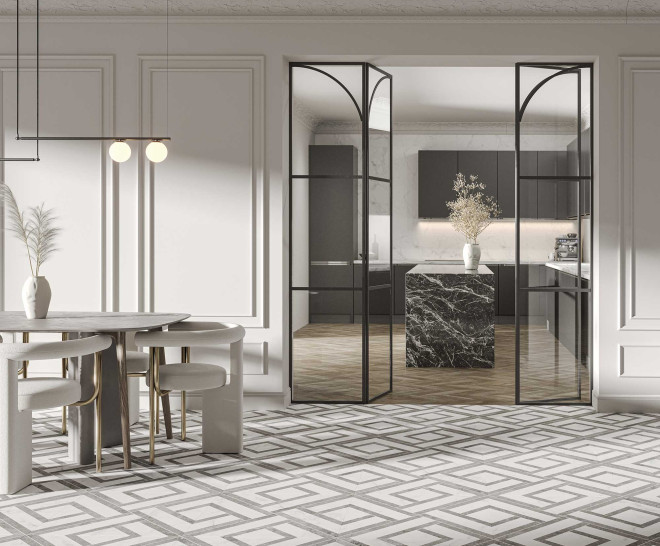
Decorative bathroom tiles make it possible to transform a functional space into one with its own distinct identity. Through color, texture, pattern, or format, these ceramic solutions help highlight walls, define different areas, or even give prominence to the floor without overwhelming the overall design.
In this article, we will explore how to use them in a balanced way, which areas they work best in, and the key aspects to consider when integrating them into a bathroom design with coherence and purpose.
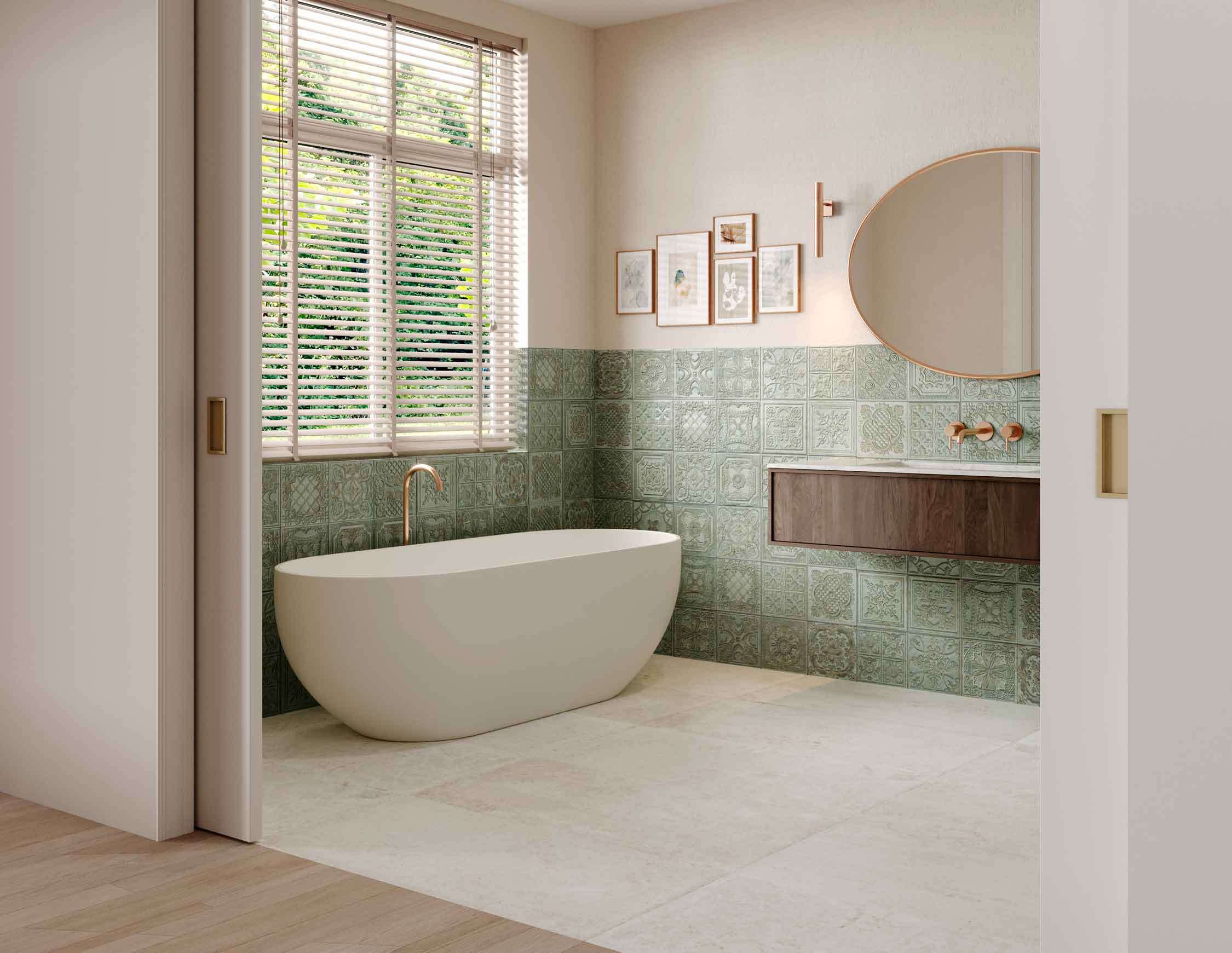
Gatsby
What Decorative Tiles Are and Why They Make a Difference in the Bathroom
Decorative tiles are ceramic pieces designed to bring a distinctive aesthetic value to a space. They incorporate patterns, textures, or color variations that create surfaces with greater visual richness, both on walls and floors.
Although they have traditionally been associated with small formats, today there are also larger-format solutions that reproduce these decorative designs. This makes it possible to achieve a more seamless visual effect, with fewer grout lines and a more efficient installation process.
Beyond protecting walls and floors, decorative tiles help define the character of a bathroom. When used strategically, they can highlight specific areas or introduce contrast without overwhelming the overall design, while maintaining the inherent benefits of ceramic materials: durability, resistance, and ease of maintenance.
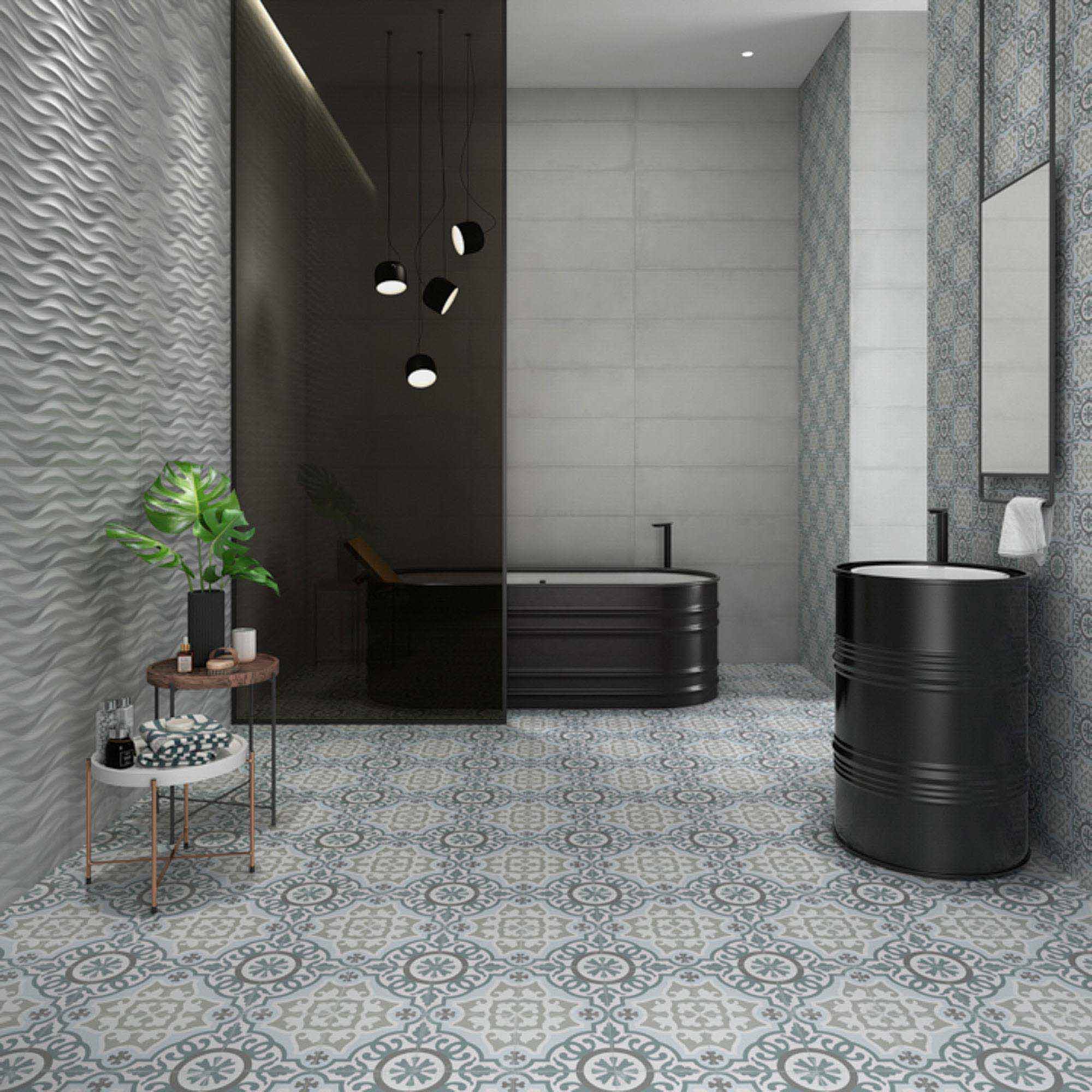
Tango
Where to Use Decorative Tiles in the Bathroom
Placement is key to making the most of decorative tiles. Rather than covering every surface, the goal is to use them strategically to highlight specific areas of the bathroom, create contrast, or introduce visual rhythm without compromising the overall balance.
Main Bathroom Wall
Using decorative tiles on a feature wall creates a clear focal point without the need to transform the entire space. This solution is particularly effective in large or open-plan bathrooms, where a visually striking surface helps define the space while adding character and personality.
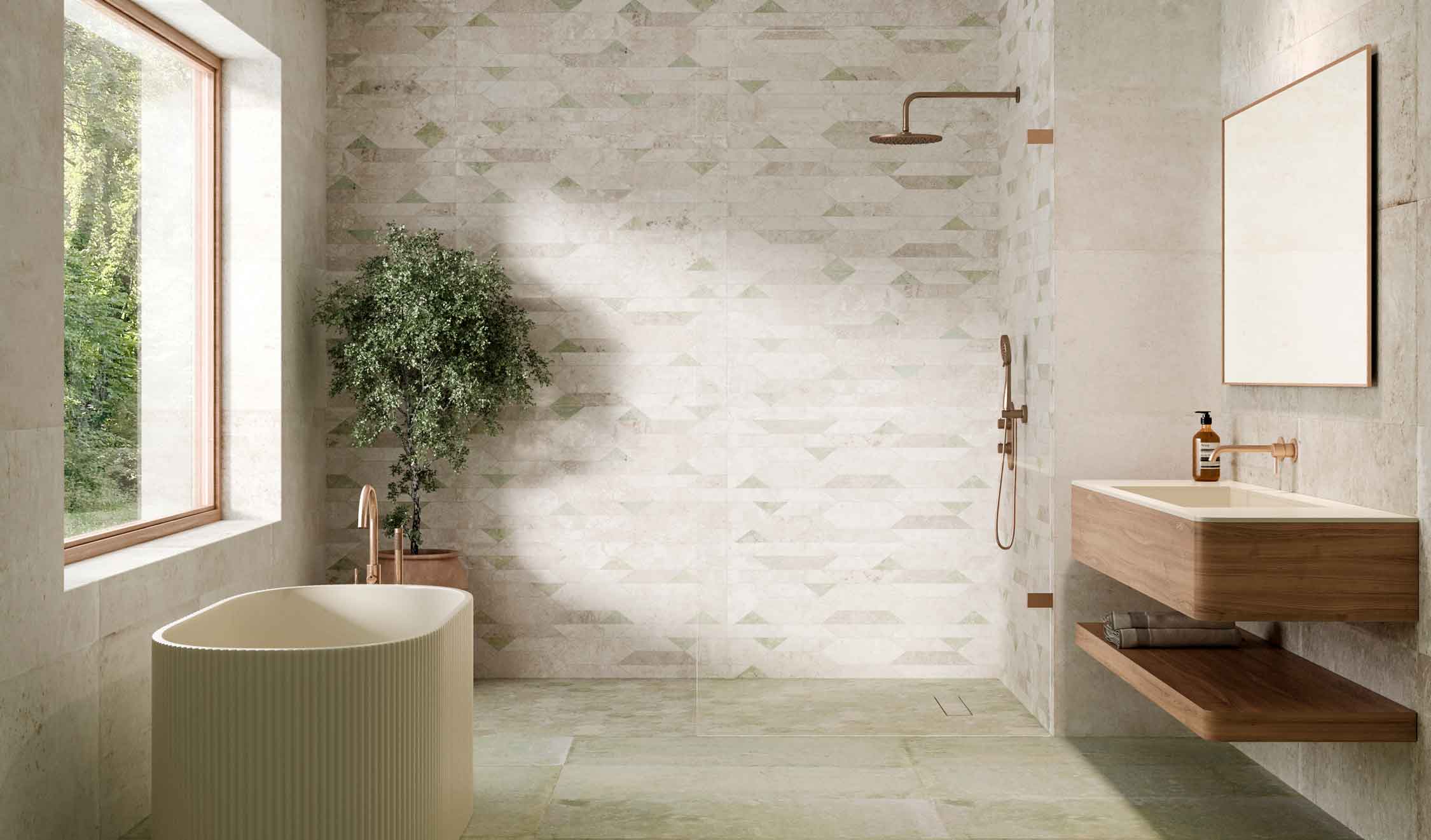
Noho
Shower Area
Decorative tiles work particularly well in defined areas of the bathroom, especially when the goal is to distinguish a specific zone without redesigning the entire space. Decorative shower tiles make it possible to introduce texture or contrast in a controlled way, maintaining harmony with the surrounding surfaces.
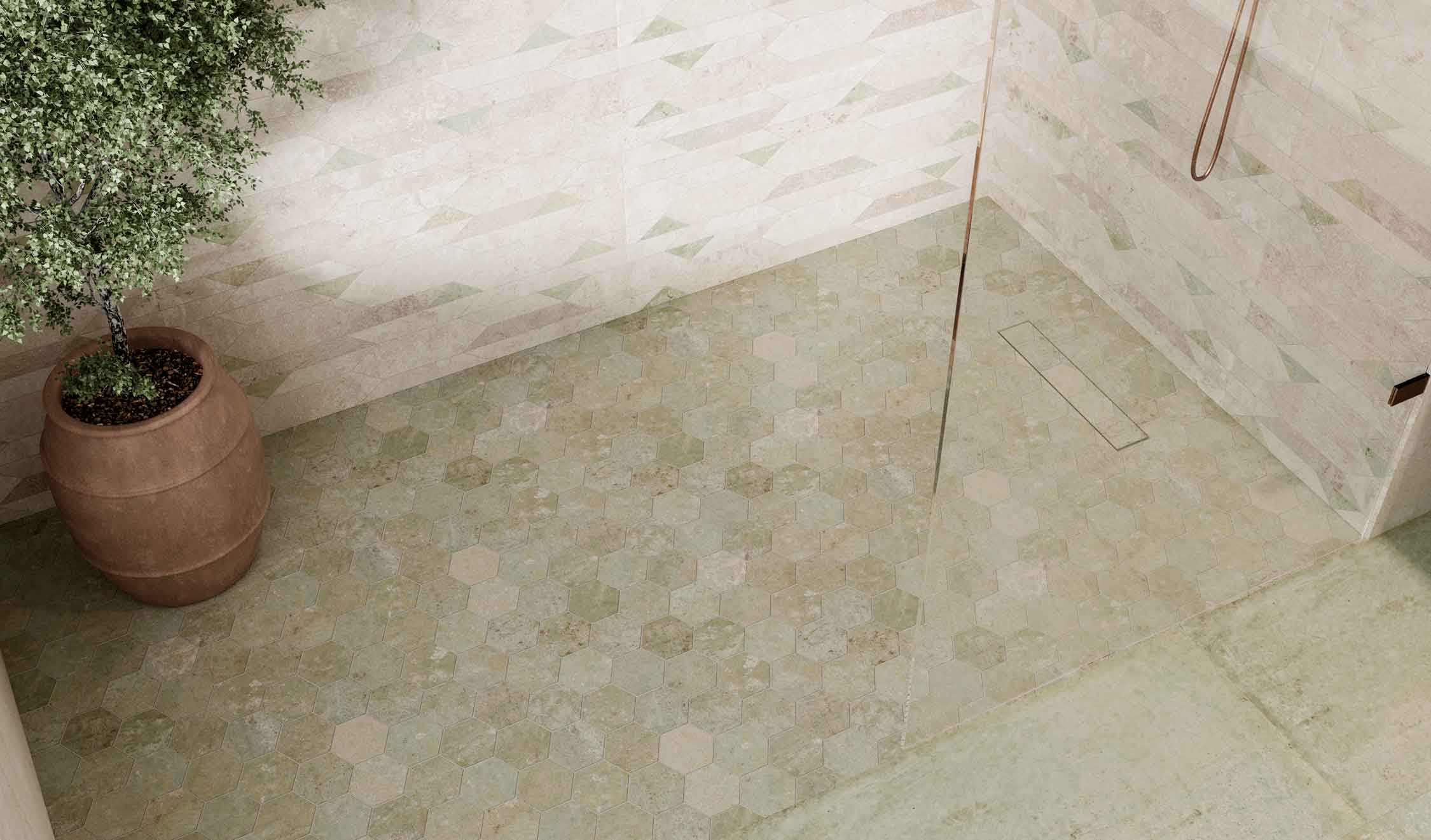
Noho
Backsplash in the Vanity Area
The area behind the sink is another strategic location for incorporating decorative tiles. In addition to their aesthetic value, they protect the wall from splashes and serve as a backsplash, helping to keep the surface in good condition over time.
As this is a highly visible area, it offers an opportunity to introduce design in a more expressive way. Decorative tiles can frame the vanity unit or mirror and reinforce the identity of the space without the need to extend the feature to other surfaces.
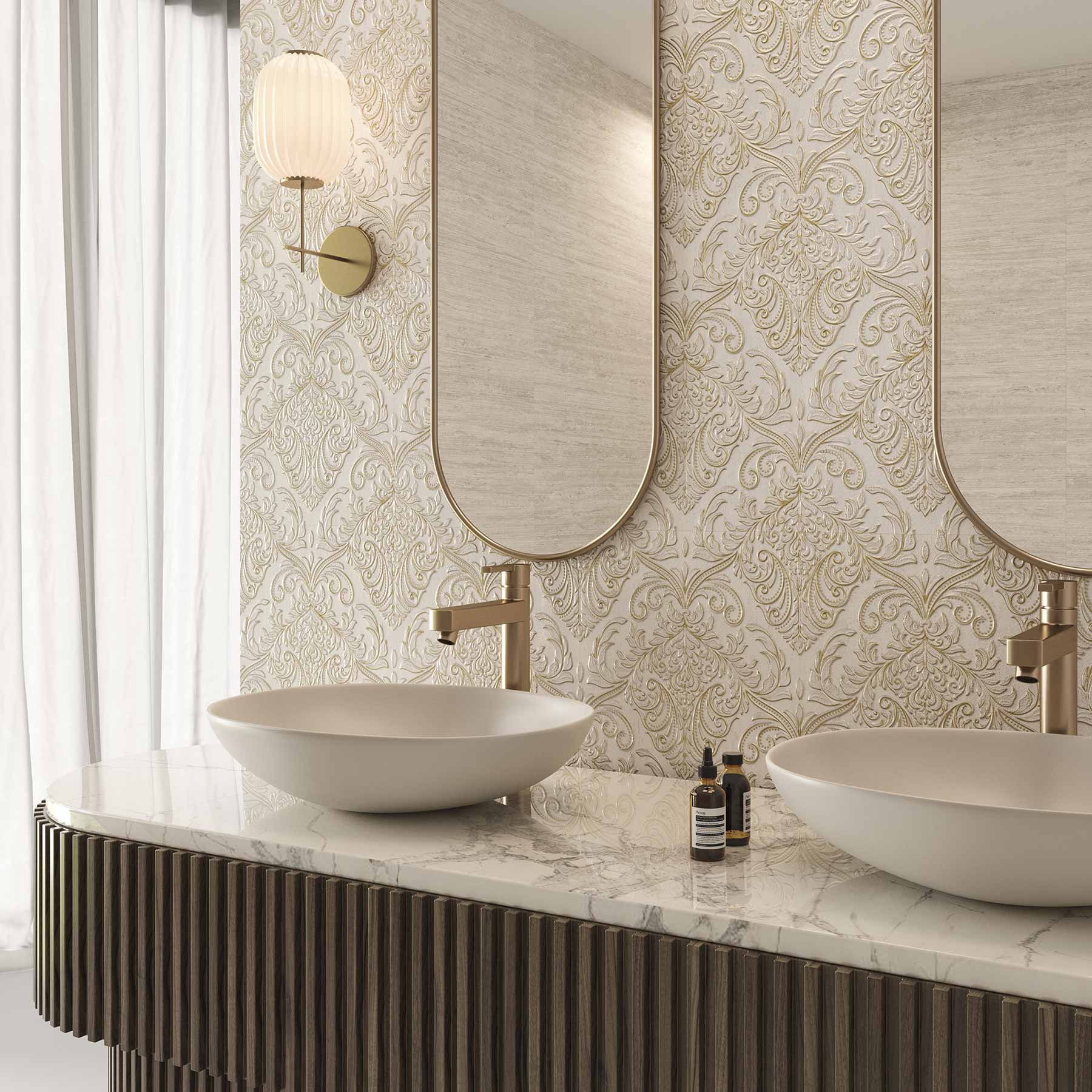
Umbria
Half-Height Wall Tiling
Half-height wall tiling is an effective way to introduce decorative tiles in a balanced manner without overwhelming the space. This approach combines a more neutral lower section with a lighter upper area, creating contrast and adding visual rhythm to the bathroom.
Decorative Flooring
In addition to walls, decorative tiles can also be used on floors to define areas or add character to the overall design. They are particularly useful in open-plan or integrated bathrooms, where they help distinguish different zones without the need to change materials, maintaining visual consistency throughout the space.
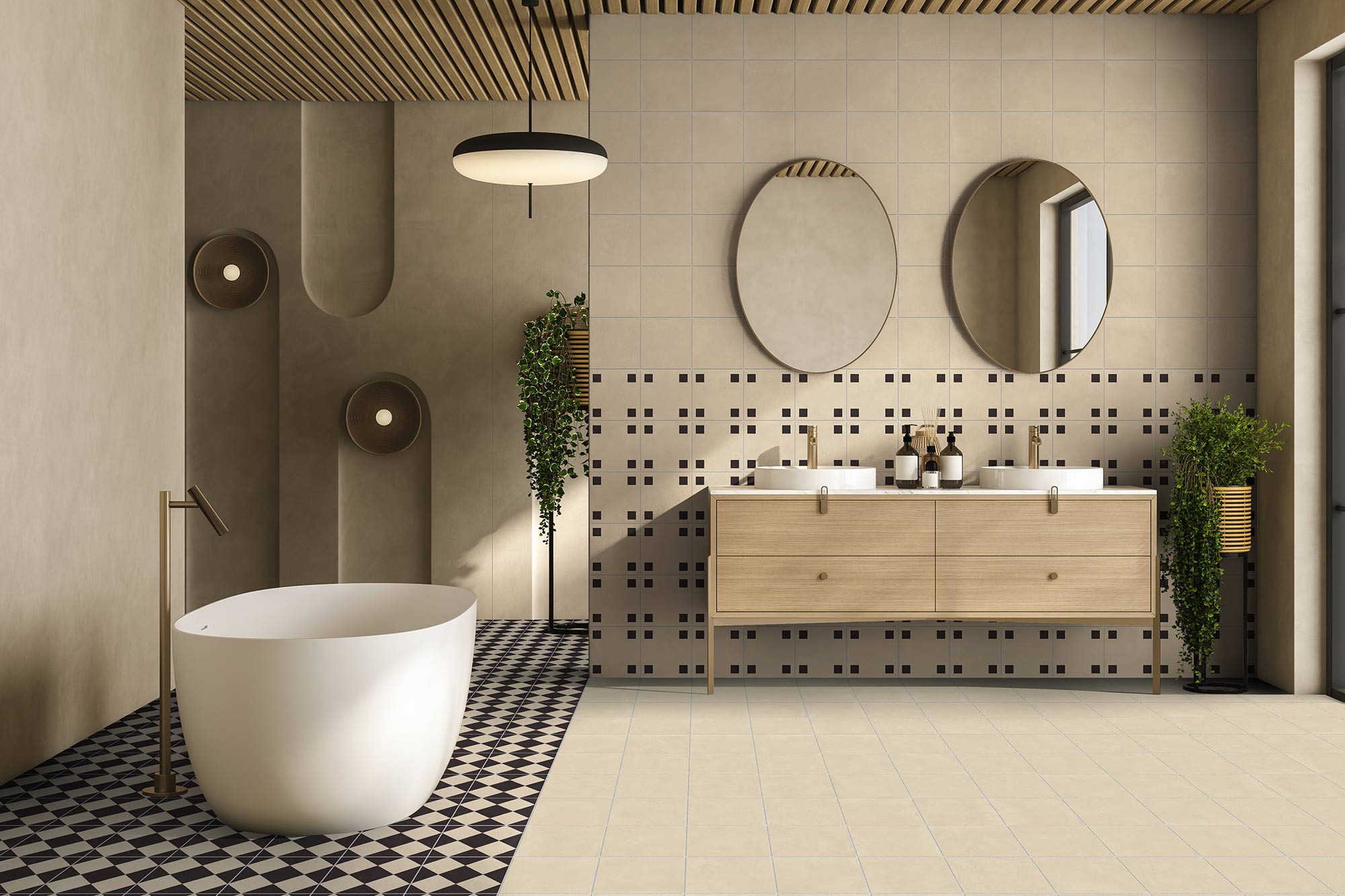
Danube
Types of Decorative Bathroom Tiles
Decorative tiles make it possible to introduce a wide range of aesthetic styles into the bathroom, from contemporary geometric designs to patterns inspired by classic or almost handcrafted traditions.
Geometric Tiles
The geometric patterns often found in hydraulic-style tiles add dynamism and help create surfaces with greater visual rhythm. They work particularly well in contemporary bathrooms, where the design aims to introduce contrast without relying on an excessive variety of materials or colors.
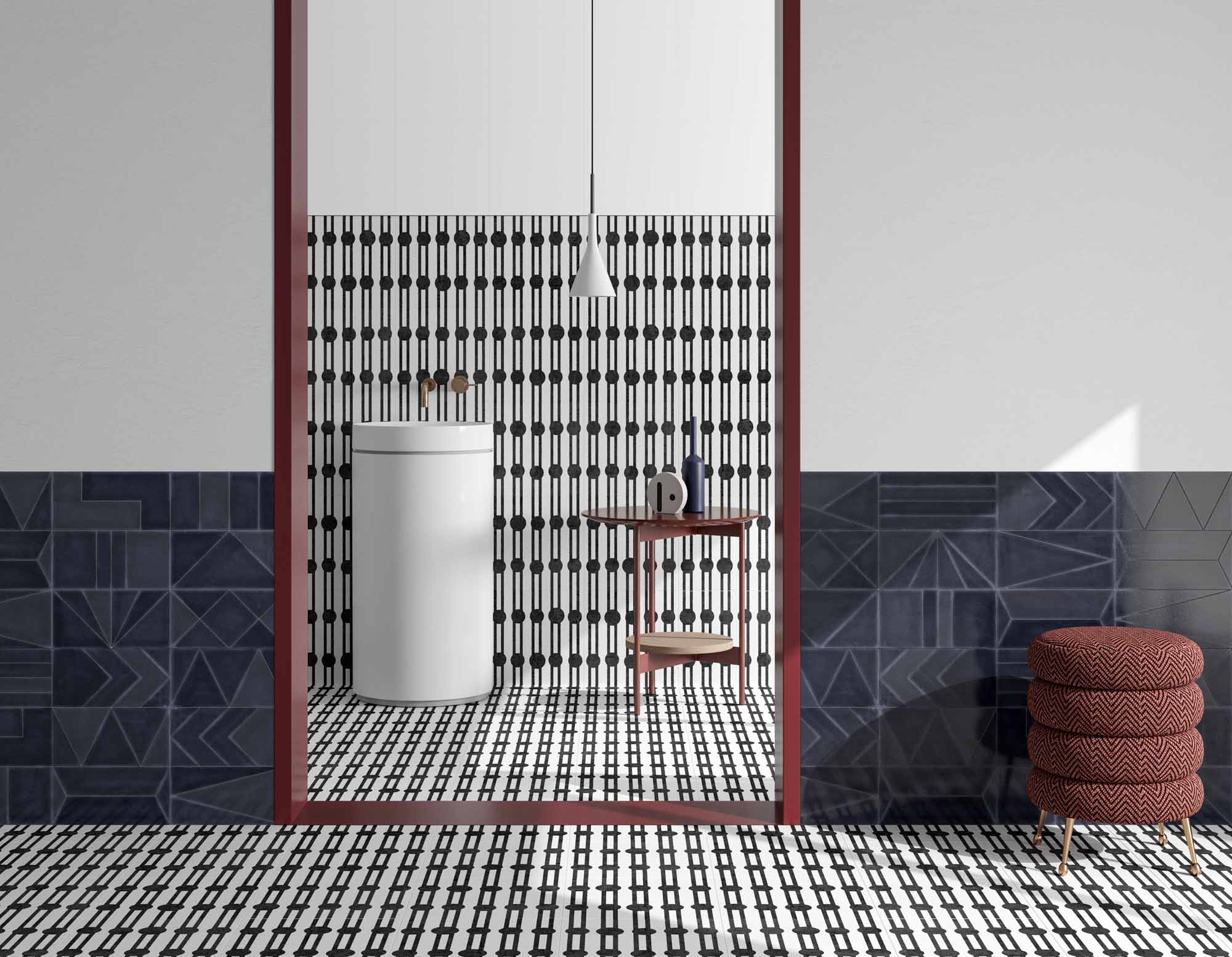
Crea
Textured Tiles
Textured tiles add depth and visual interest to a space. The way light interacts with these surfaces creates changing visual effects throughout the day, bringing a more dynamic and immersive character to the bathroom.
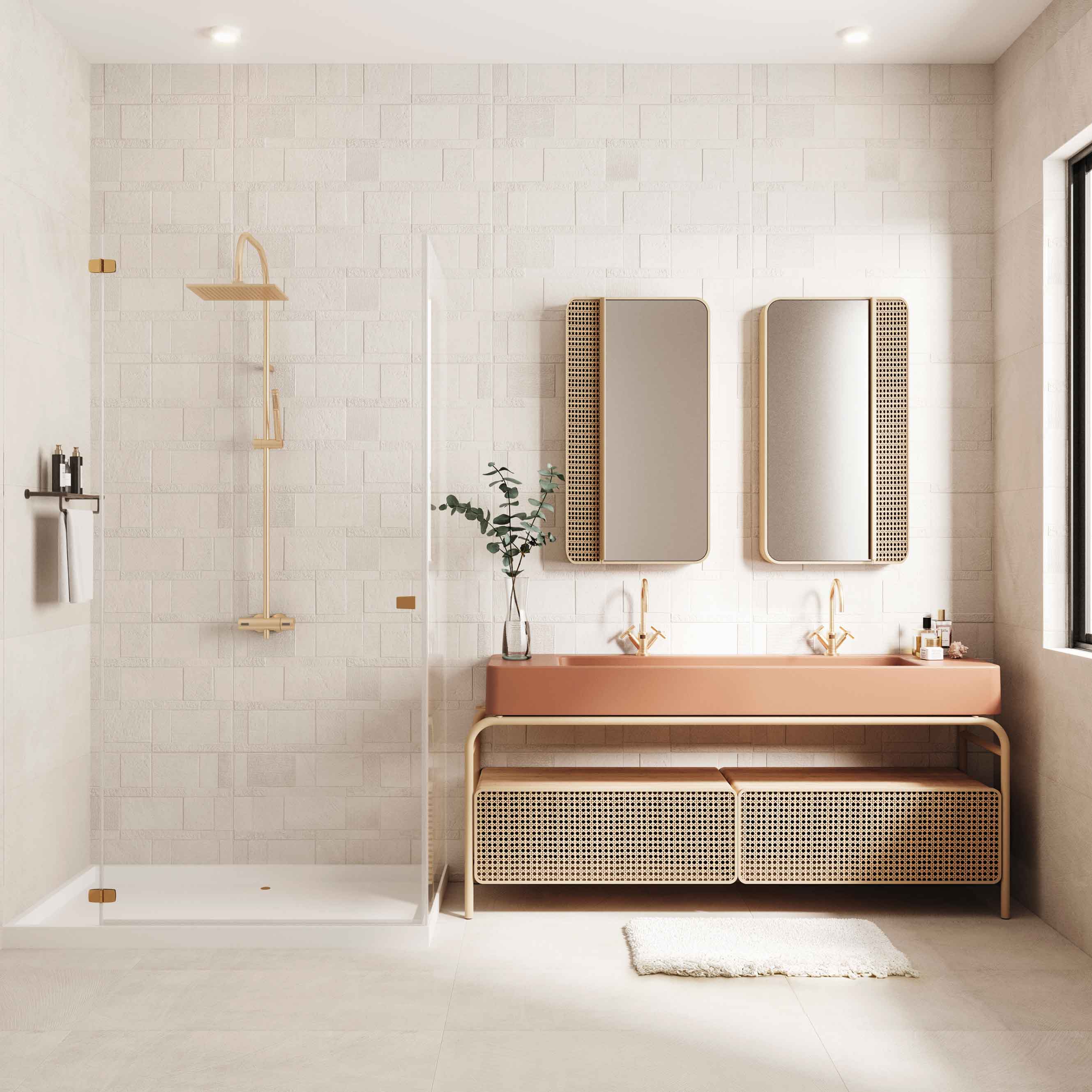
Classical or Neoclassical Inspiration
Neoclassical aesthetics continue to have a place in contemporary bathrooms through designs that reinterpret their defining elements from a more modern perspective. Balanced surfaces, symmetrical compositions, and subtle decorative details make it possible to introduce character and sophistication without overwhelming the space.
In line with the enduring appeal of the neoclassical style, decorative tiles help create elegant and timeless interiors that can coexist seamlessly with more contemporary materials and design solutions.
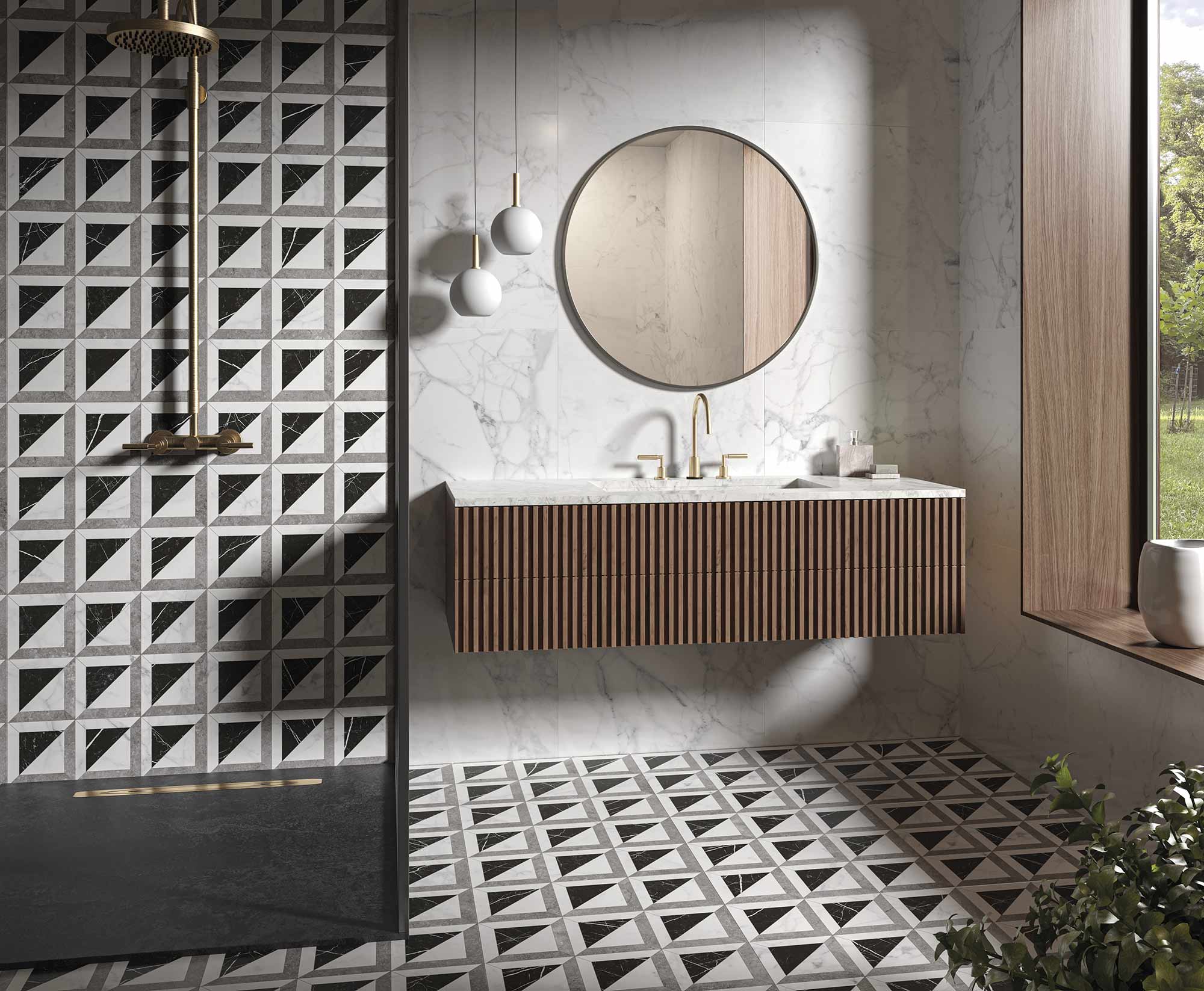
Majestic
Mosaics and Small-Format Tiles
Mosaics and small-format tiles remain one of the most popular choices for decorative bathrooms. Their ability to adapt to curves, niches, and specific areas makes it easier to create more detailed and personalized compositions.
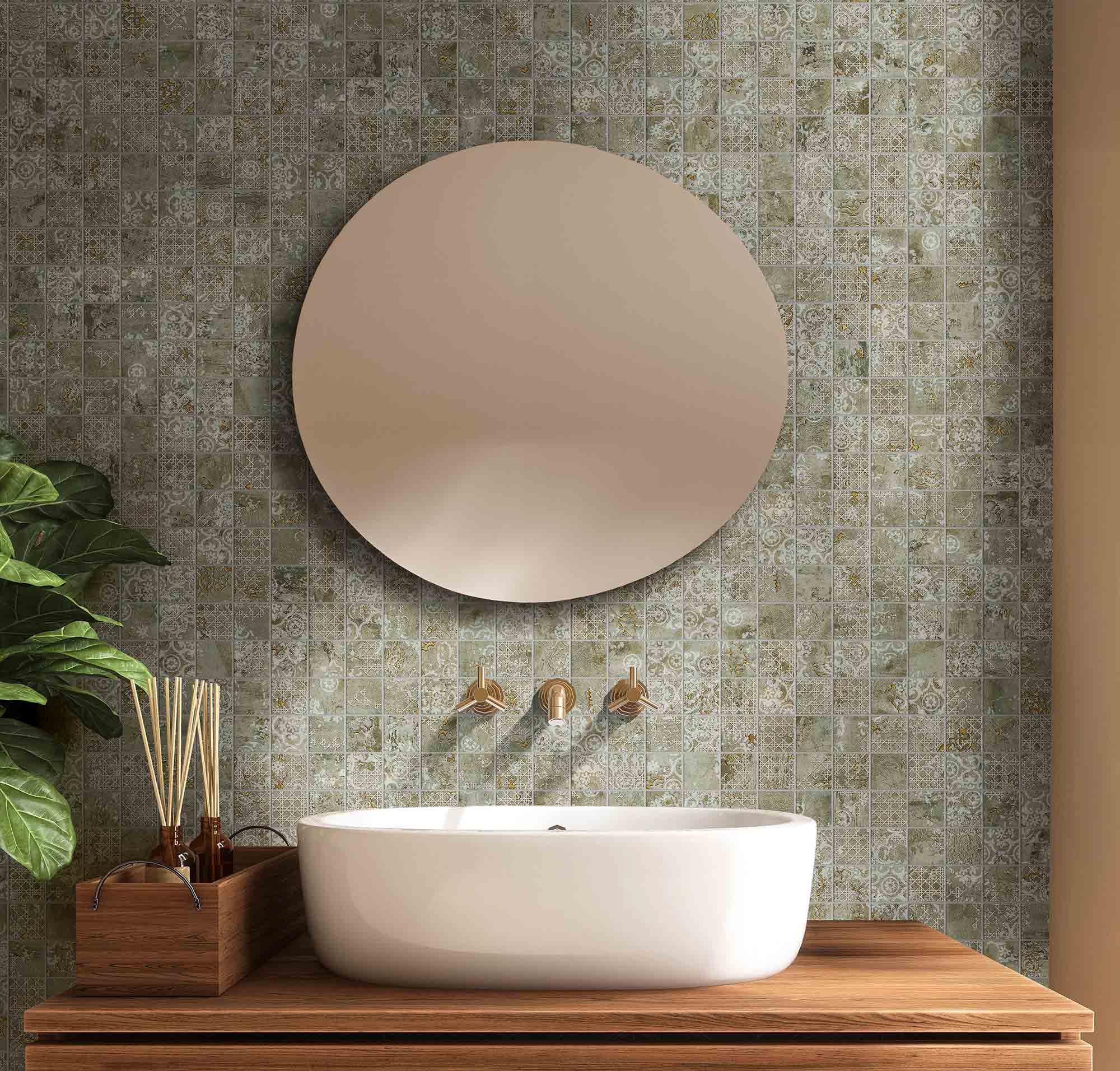
Rug
How to Combine Decorative Tiles in the Bathroom
Decorative tiles work best when they are integrated in a balanced way within the overall design. Combining them with other materials, formats, or colors allows the decorative element to stand out without overwhelming the space.
Pairing decorative tiles with neutral base surfaces helps balance the design and better highlight patterns or textured details.
Using decorative tiles in a single area creates a cleaner and more organized focal point.
Mixing large-format tiles with smaller pieces adds visual dynamism and prevents surfaces from feeling too flat or uniform.
Materials such as wood, stone, or marble-effect finishes help soften more expressive compositions and create a harmonious overall aesthetic.
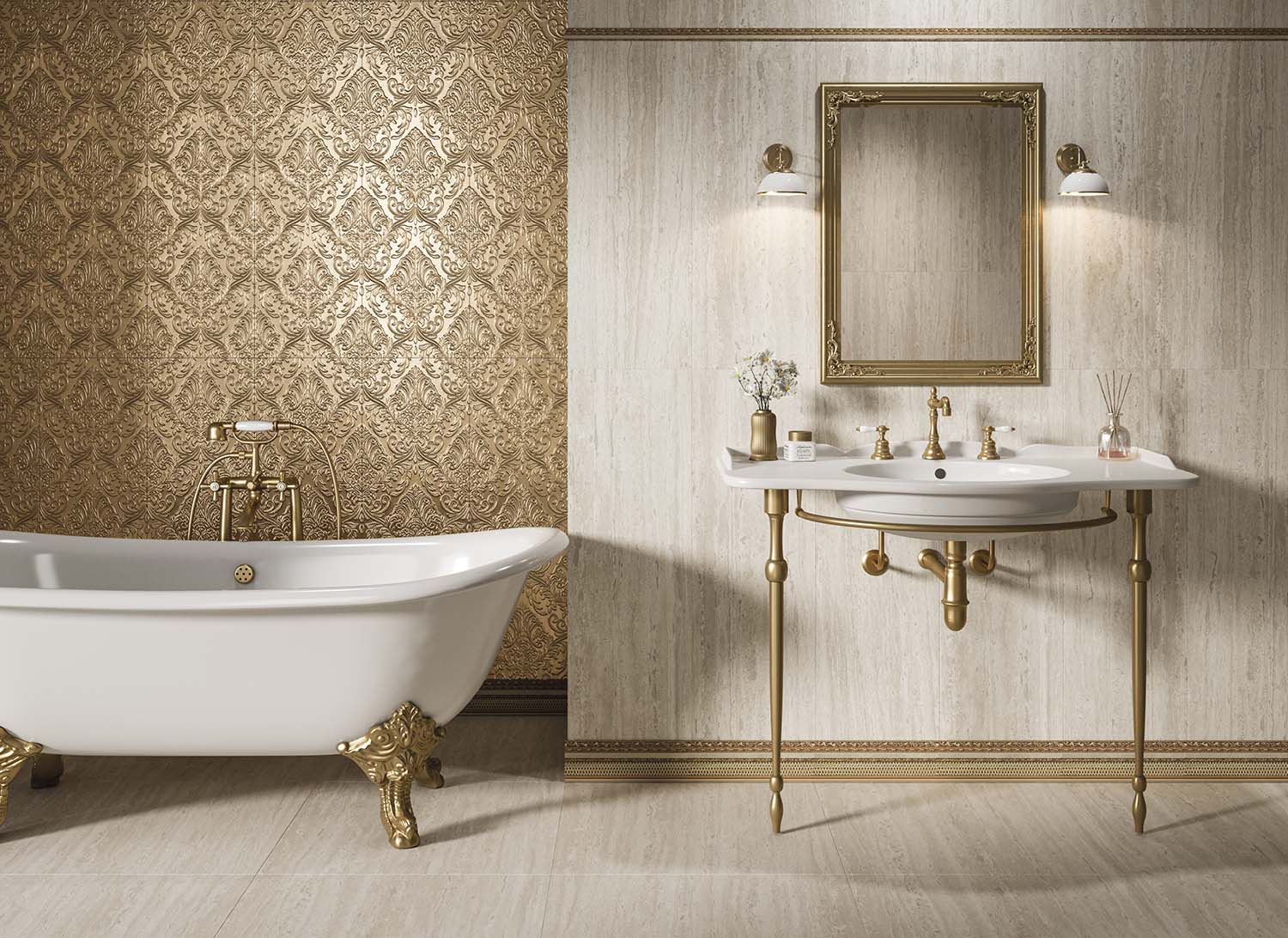
Umbia
Key Tips for Using Decorative Tiles Successfully
Beyond the design itself, the success of decorative tiles depends on how they are integrated into the overall space. A balanced approach allows their aesthetic value to stand out without making the bathroom feel overly busy.
Adapting the level of decoration to the size of the bathroom helps maintain a more balanced visual perception.
Lighting has a direct impact on how patterns, colors, and textures are perceived, especially on textured surfaces.
More expressive designs tend to work best when combined with neutral materials or finishes.
In open-plan or integrated bathrooms, repeating certain tones or finishes helps create visual continuity between different areas.
Before selecting a design, it is important to consider how it will coordinate with other bathroom elements, such as furniture, fixtures, and flooring.
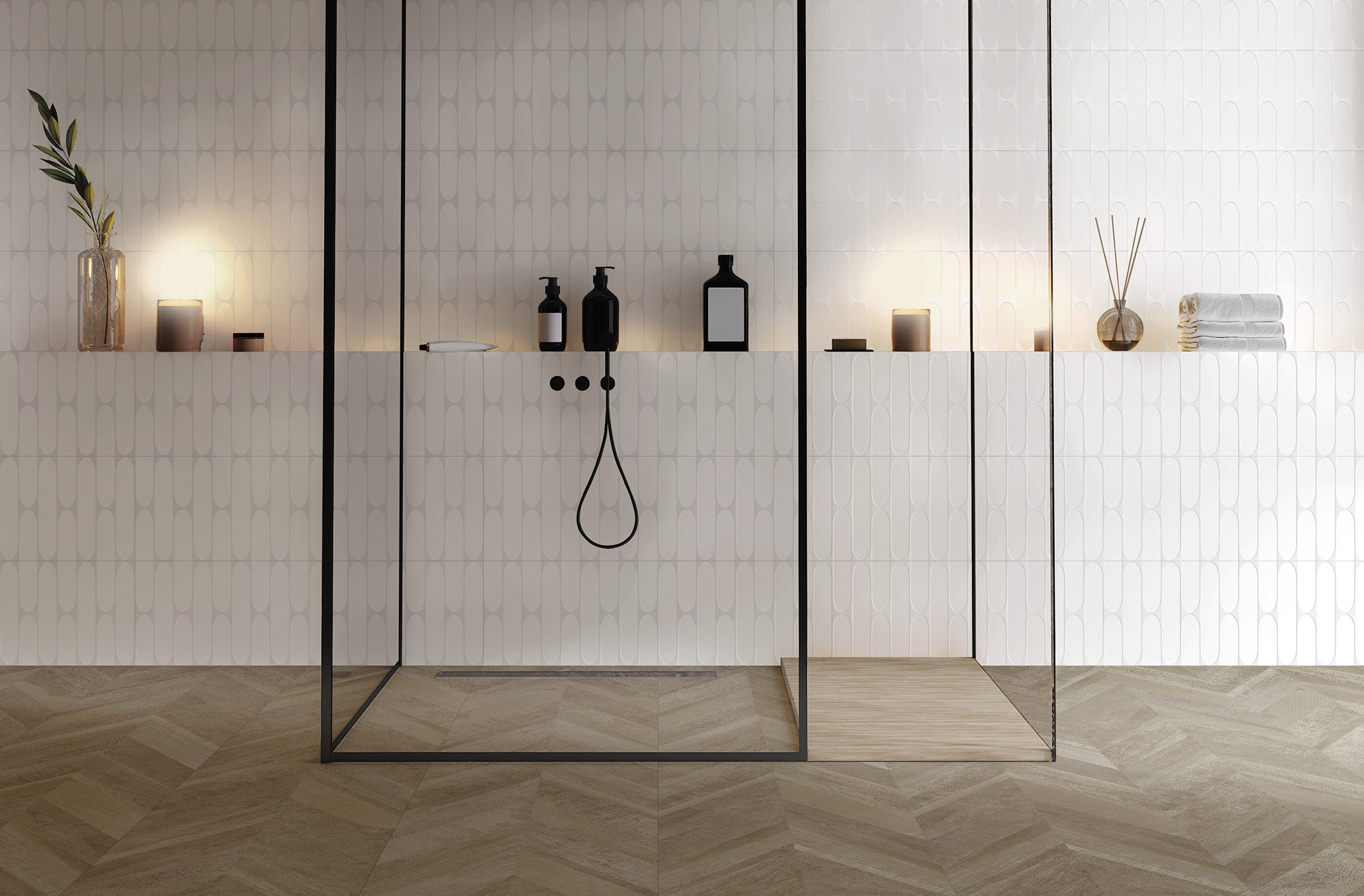
Rado
Decorative tiles make it possible to introduce personality and character into the bathroom through color, texture, and pattern. When used strategically, they help create more expressive and balanced spaces, both on walls and floors.
The evolution of ceramic formats and designs has also expanded their potential in contemporary projects, where decorative elements increasingly coexist with continuous surfaces, technical solutions, and more refined compositions.